Menu


Actigall (ursodeoxycholic acid) is a naturally occurring bile acid used for the dissolution of radiolucent, non-calcified cholesterol gallstones less than 20 mm in diameter in patients with a functioning gallbladder, and for the prevention of gallstone formation in obese patients experiencing rapid weight loss. It works by reducing hepatic cholesterol secretion and decreasing the cholesterol saturation of bile, promoting the gradual dissolution of cholesterol gallstones and preventing their formation. Actigall is used when surgical intervention is not appropriate or as a prophylactic measure alongside significant dietary changes.
Usual adult dose: For gallstone dissolution: 8 to 10 mg/kg per day, divided into two or three doses. A typical dosing regimen for a 70 kg adult is 300 mg twice daily (600 mg total daily dose). For the prevention of gallstones during rapid weight loss: 300 mg twice daily. Treatment duration for dissolution typically ranges from 6 to 12 months, and ultrasound imaging should be used to monitor gallstone size at 6-month intervals. If dissolution has not occurred after 12 months, treatment should be discontinued as the likelihood of success is greatly reduced.
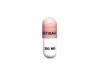
Dosage form: Hard gelatin capsules: 300 mg (white to off-white powder in a gelatin shell). The capsules should be swallowed whole with a glass of water and taken with food to ensure adequate bile flow and drug dispersion.
Onset of action: Changes in the lithogenic index of bile occur within weeks of initiating treatment, with a significant reduction in cholesterol saturation observed. Gallstone dissolution is a gradual process, with partial dissolution potentially visible on ultrasound after 3 to 6 months of continuous therapy. Complete dissolution may require 6 to 12 months or longer.
Duration of action: Ursodeoxycholic acid has an elimination half-life of approximately 3.5 to 5.8 days. Its pharmacological effect on bile composition persists with continuous twice-daily dosing. Once therapy is stopped, bile reverts to its supersaturated state, and gallstone recurrence may occur in up to 50% of patients within 5 years.
Alcohol recommendation: There is no absolute contraindication to alcohol consumption with Actigall. However, alcohol intake should be moderated or avoided entirely. Excessive alcohol consumption can negatively affect liver function, increase biliary cholesterol saturation, and counteract the therapeutic effect of ursodeoxycholic acid on gallstone dissolution.
Most common side effects: Diarrhoea or loose stools are the most commonly reported adverse effects, often dose-related and typically mild and transient. Other common side effects include constipation, nausea, dyspepsia, and abdominal discomfort. A pruritic rash has also been reported occasionally. Importantly, gallstone calcification may occur during therapy, rendering the stones non-dissolvable and necessitating discontinuation of treatment.
Would you like to try Actigall (Ursodeoxycholic Acid) without a prescription?


| Country | Shipping method | Delivery time | Price | |
|
|
 Delivery Delivery |
14-21 days | 14.95$ | Tracking# available in 4 days |
 Delivery Delivery |
9-14 days | 30$ | Tracking# available in 2 days |
At our pharmacy, you can buy Actigall without a prescription, with discreet and anonymous packaging delivered within 5-14 days across the UK.
Actigall contains ursodeoxycholic acid, a bile acid that occurs naturally in small amounts in the human body. Its main job is dissolving cholesterol gallstones in patients who have a functioning gallbladder. It also gets used for primary biliary cholangitis, a chronic liver condition where the bile ducts become inflamed and gradually destroyed. The drug works by reducing the cholesterol saturation of bile, which means existing stones can gradually dissolve instead of growing. For the right patient, it spares them from surgery entirely.
The standard dose for gallstone dissolution is 8 to 10 mg per kilogram of body weight per day, split into two or three doses. For a 75 kg person, that typically means 300 mg twice daily. Treatment lasts 6 to 12 months, and sometimes longer. Ultrasound checks every 6 months track progress. If the stones have not shrunk after 12 months, continuing is unlikely to help. The 300 mg capsule is the most common strength prescribed in the UK.
Ursodeoxycholic acid shifts the composition of bile. Normally, bile contains cholesterol, phospholipids, and bile acids in a delicate balance. When that balance tips — too much cholesterol, not enough bile acid — cholesterol crystallises and stones form. UDCA increases the bile acid pool and reduces cholesterol secretion from the liver into bile. Over months, the cholesterol in gallstones moves back into the bile and gets excreted.
There is more to it than just stone dissolution. In primary biliary cholangitis, UDCA protects the bile duct cells — cholangiocytes — by displacing toxic, hydrophobic bile acids that accumulate in the liver. It also has immunomodulatory effects and reduces HLA class I expression on hepatocytes. The precise mechanism in PBC is still being teased apart, but the clinical endpoint is clear: it slows disease progression and extends transplant-free survival. The drug is absorbed in the small intestine, conjugated with glycine or taurine in the liver, and undergoes enterohepatic recirculation.
Take Actigall with food. A meal triggers gallbladder contraction and bile release, which is exactly when you want UDCA present. Splitting the total daily dose across morning and evening doses keeps bile saturation consistently lower. If you take your full daily dose all at once on an empty stomach, you get a fraction of the benefit.
Consistency matters more than precision timing. Take it with breakfast and dinner, give or take an hour. If you forget a dose, take it with your next meal. If you are already close to the next scheduled dose, skip the missed one. Do not double up. Missing the odd dose over a 12-month treatment course will not undo progress, but weeks of erratic dosing will. This is a drug that requires patience. Stones do not dissolve quickly.
The most common side effect is diarrhoea. It affects roughly 1 in 10 patients and is usually dose-related. The unabsorbed UDCA draws water into the colon, which speeds things up. Reducing the dose temporarily often settles it. If diarrhoea persists, the dose may need adjusting downward permanently.
Other people notice nausea or mild abdominal discomfort in the first week or two. This tends to resolve on its own. Very rarely, gallstone calcification occurs during treatment, which is picked up on follow-up ultrasound. Calcified stones will not dissolve with UDCA. At that point, the drug is usually stopped and surgery considered.
Liver function tests can rise transiently. For PBC patients, this often settles as treatment continues. Your doctor will monitor bloods periodically regardless of the indication.
Actigall does not work for all gallstones. Stones larger than 20 mm in diameter rarely dissolve completely. Stones that are calcified or pigment stones — usually a consequence of haemolysis — are not cholesterol-based and UDCA will not touch them. A non-functioning gallbladder, confirmed by an oral cholecystogram, also rules out treatment. If the gallbladder cannot contract and empty, the drug-saturated bile never reaches the stones.
Pregnancy is not an absolute contraindication, but data is limited. Animal studies show no teratogenicity, but human data is sparse. UDCA is used in obstetric cholestasis under specialist supervision during the third trimester, which gives some reassurance. Even so, it is not a drug to take during pregnancy without clear need and a doctor actively managing it.
In patients with advanced primary biliary cholangitis and cirrhosis, dose adjustments are not required. UDCA is remarkably well tolerated in liver disease, which is part of why it is first-line treatment for PBC. The same cannot be said for patients with complete biliary obstruction. If bile cannot flow at all — for example, a stone lodged in the common bile duct — UDCA achieves nothing and may worsen liver enzymes.
People with inflammatory bowel disease affecting the terminal ileum, like Crohn's disease, or those who have had ileal resection may absorb less UDCA because the enterohepatic circulation is disrupted. Higher doses or alternative approaches may be needed, and specialist gastroenterology input becomes essential.
Actigall does not affect alertness or reaction time. Driving is fine. The diarrhoea it sometimes causes could be a practical concern on a long journey, but that is about access to facilities, not impairment.
Alcohol is a more nuanced topic. If you have gallstones, alcohol in moderation — a few units per week — is generally not a problem. Heavy, regular drinking damages the liver, which complicates the picture. For primary biliary cholangitis, the advice is stricter. PBC is a liver disease, and adding alcohol on top of an already inflamed biliary system is asking for faster progression. Complete abstinence is the safer call in that context, though some specialists permit the occasional single drink if liver enzymes are well controlled.
UDCA is not metabolised through CYP450 enzymes and has very few drug interactions compared to most medications. That is one of its clinical strengths.
The one interaction that matters is with bile acid sequestrants — colestyramine, colestipol, and to a lesser extent colesevelam. These bind UDCA in the gut and prevent absorption. If you need both, space them at least 2 hours apart, preferably longer. Colestyramine is sometimes used for the pruritus that accompanies PBC. In that scenario, timing the doses around each other becomes a daily logistical puzzle that matters.
Aluminium-based antacids can also bind bile acids and reduce absorption. Standard antacid use is unlikely to be a problem, but do not take UDCA and a high-dose antacid at exactly the same time. A gap of an hour is sufficient.
Oral contraceptives and oestrogen therapy increase the cholesterol saturation of bile, which is part of why they raise gallstone risk in the first place. UDCA can still work while you are on these medications, but oestrogen is working against it. Discuss this with your doctor. Sometimes switching contraception is the simpler path.
For gallstones that do not meet the criteria for UDCA — and frankly, most do not — laparoscopic cholecystectomy remains the definitive treatment. It is a routine operation with a quick recovery and low complication rate when performed electively. The gallbladder is not essential for digestion, though some people notice looser stools or bloating after surgery. Most adapt within months.
Extracorporeal shock wave lithotripsy (ESWL) breaks stones into fragments small enough to pass or dissolve with UDCA. It is rarely used now. The recurrence rate is high because the underlying metabolic issue — cholesterol-supersaturated bile — remains. Combining ESWL with UDCA can work for single, small, radiolucent stones, but very few UK centres offer it routinely.
For primary biliary cholangitis, obeticholic acid was introduced as a second-line option for patients who do not respond adequately to UDCA, defined as alkaline phosphatase more than 1.67 times the upper limit of normal after 12 months of treatment. It is a farnesoid X receptor agonist. It works through a different pathway and can be added to UDCA, not substituted. It carries a risk of pruritus that can be dose-limiting. Fibric acid derivatives like bezafibrate are also used off-label in specialist centres for PBC, with accumulating evidence of biochemical improvement.
General measures matter too. Weight loss in obese patients reduces cholesterol secretion into bile. A diet high in fibre and moderate in healthy fats supports gallbladder motility. Small, frequent meals trigger regular gallbladder emptying. These things do not replace UDCA but they stack the odds in your favour.
INN (International Nonproprietary Name): Ursodeoxycholic acid (UDCA)
Available brand names in the UK: Actigall, Ursofalk, Ursogal, Destolit
ATC code: A05AA02
Forms and strengths: Capsules: 250 mg, 300 mg; Tablets: 150 mg, 300 mg, 500 mg; Oral suspension: 250 mg/5 mL
Manufacturers: Actavis (Actigall), Dr. Falk Pharma (Ursofalk), Norgine (Destolit), and diverse generic manufacturers
Registration status in the UK: Registered as a Prescription Only Medicine (POM)
Classification: Prescription Only Medicine (POM)
The 300 mg capsule is the workhorse strength for gallstone dissolution in average-weight adults. The 250 mg strength and oral suspension provide flexibility for dose titration, particularly in PBC where doses are often weight-based at 13 to 15 mg per kilogram per day. The suspension is helpful if you cannot swallow capsules or need doses that do not align neatly with the solid formulations.
Between brands, the active ingredient is the same. Inert excipients differ, but there is no meaningful clinical difference in efficacy or tolerability between Actigall, Ursofalk, and generics. If one brand causes more gastrointestinal upset than another, swapping is reasonable. Sometimes it is the capsule shell, not the UDCA itself.
How long does it take for Actigall to dissolve gallstones?
Partial dissolution may be visible on ultrasound at 6 months. Complete dissolution usually takes 6 to 12 months for stones smaller than 10 mm. Stones between 10 and 20 mm can take up to 2 years, and success is less certain. If there is no change at all by 12 months, the treatment is unlikely to work and surgery becomes the logical next step.
What happens if my gallstones calcify during treatment?
Calcification shows up on ultrasound as a denser, brighter area within the stone. UDCA cannot dissolve calcified material. At that point, the drug is stopped. The presence of calcified stones does not automatically mean you need your gallbladder removed, but if the stones are symptomatic, cholecystectomy is usually recommended.
Can I take Actigall during pregnancy?
UDCA is used in obstetric cholestasis, a liver condition specific to pregnancy, where it reduces bile acid levels and improves foetal outcomes. In that context, it is given under close specialist supervision, usually in the third trimester. For gallstone treatment during pregnancy, it is generally avoided unless the benefit clearly outweighs the risk. Discuss it with your obstetrician and gastroenterologist together.
Does Actigall prevent new gallstones from forming?
Yes, as long as you are taking it. UDCA reduces the cholesterol saturation of bile, which is the condition that causes cholesterol stones in the first place. Once you stop, bile composition gradually returns to its pretreatment state, and stones can recur. Recurrence rates after successful dissolution are roughly 30% to 50% over 5 years. This is why surgery is often preferred for younger patients: it is a one-time fix.
What if I have both gallstones and primary biliary cholangitis?
UDCA treats both, though the doses may differ. PBC typically requires 13 to 15 mg per kilogram per day, which is higher than the 8 to 10 mg per kilogram used for gallstone dissolution. Your hepatologist will decide the target dose. The presence of gallstones in a PBC patient does not change the primary treatment goal, which is slowing liver disease progression.
We ship Actigall to all parts of the United Kingdom. Delivery times depend on your location:
All shipments are packed discreetly with no branding or indication of contents on the outside. At our pharmacy, you can purchase Actigall without a prescription, with delivery across the UK.


