Menu


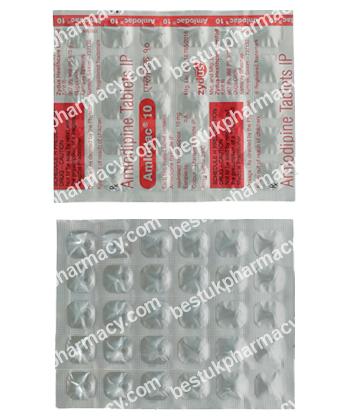
Amlodipine is a dihydropyridine calcium channel blocker indicated for the first-line treatment of essential hypertension in adults and children aged 6 years and older, and for the symptomatic treatment of chronic stable angina pectoris and vasospastic angina (Prinzmetal's angina). It works by inhibiting the transmembrane influx of calcium ions through voltage-dependent L-type calcium channels into cardiac and vascular smooth muscle cells. Amlodipine binds selectively to dihydropyridine receptor sites, producing a gradual and sustained vasodilation of peripheral arterioles and coronary arteries, thereby reducing peripheral vascular resistance, blood pressure, and myocardial oxygen demand. Its gradual onset of action minimises the risk of acute reflex tachycardia commonly associated with shorter-acting dihydropyridines.
Usual adult dose: For both hypertension and angina, the recommended initial dose is 5 mg once daily. Depending on the individual clinical response, the dose may be increased to a maximum of 10 mg once daily. In elderly patients or those with hepatic impairment, the initial dose is 2.5 mg once daily, and any subsequent dose titration should be undertaken with caution. Amlodipine may be used as monotherapy or in combination with other antihypertensive or antianginal agents, including beta-blockers, angiotensin-converting enzyme inhibitors, angiotensin II receptor blockers, and thiazide diuretics. No dose adjustment is required in renal impairment, and amlodipine is not effectively removed by haemodialysis. The tablets should be taken at the same time each day with a glass of water, and may be taken with or without food. Grapefruit juice should be avoided, as it may increase amlodipine plasma concentrations and enhance its blood pressure-lowering effects unpredictably.
Dosage form: Tablets: 2.5 mg (white to off-white, round, flat, bevelled edge, scored), 5 mg (white to off-white, capsule-shaped, scored on one side), and 10 mg (white to off-white, capsule-shaped, scored on one side). The 2.5 mg and 5 mg tablets are scored and can be divided into equal halves. Tablets should be swallowed whole with water.
Onset of action: Due to its gradual absorption and slow receptor association kinetics, amlodipine does not produce a rapid vasodilator response. A clinically significant reduction in blood pressure may be observed within 24 to 48 hours of initiating therapy at 5 mg once daily. Peak plasma concentrations are reached 6 to 12 hours after oral administration. Maximal antihypertensive effect generally develops after 4 to 6 weeks of continuous therapy, supporting a slow titration approach to dose optimisation. In angina, improvements in exercise tolerance and reduction in anginal episode frequency are typically seen within 1 to 2 weeks.
Duration of action: Amlodipine has a unique pharmacokinetic profile among calcium channel blockers, with a prolonged terminal elimination half-life of 35 to 50 hours and slow plasma clearance. This confers sustained 24-hour blood pressure control with once-daily dosing and minimal fluctuation between peak and trough plasma concentrations. The antihypertensive effect persists throughout the dosing interval, with a trough-to-peak blood pressure response ratio exceeding 80%. Steady-state plasma concentrations are achieved after 7 to 8 days of repeated once-daily administration.
Alcohol recommendation: Alcohol consumption should be limited during treatment with amlodipine. Alcohol has vasodilatory properties and may potentiate the blood pressure-lowering effect of amlodipine, increasing the risk of symptomatic hypotension, dizziness, and orthostatic intolerance. Furthermore, alcohol may interact with amlodipine to exacerbate the common side effects of headache and flushing. Patients should be advised to moderate their alcohol intake and to avoid activities requiring full alertness, such as driving, if they experience dizziness or related symptoms.
Most common side effects: Peripheral oedema, particularly ankle swelling, is the most commonly reported adverse effect and is dose-dependent, occurring in approximately 10% to 15% of patients at the 10 mg dose. This is due to preferential arteriolar dilation without corresponding venodilation, leading to increased capillary hydrostatic pressure; it is not indicative of heart failure and may be managed by dose reduction, addition of an ACE inhibitor or ARB, or leg elevation. Other very common or common side effects include headache, flushing, dizziness, palpitations, fatigue, and abdominal pain. Gingival hyperplasia is a less common but well-recognised adverse effect, and patients should be counselled on maintaining good oral hygiene. Ankle oedema and flushing tend to diminish with continued therapy but may require dose adjustment if persistent and bothersome.
Would you like to try Amlodipine without a prescription?


| Country | Shipping method | Delivery time | Price | |
|
|
 Delivery Delivery |
14-21 days | 14.95$ | Tracking# available in 4 days |
 Delivery Delivery |
9-14 days | 30$ | Tracking# available in 2 days |
At our pharmacy, you can buy Amlodipine without a prescription, with discreet and anonymous packaging delivered within 5-14 days across the UK.
Amlodipine is a calcium channel blocker used to treat hypertension and angina. It belongs to the dihydropyridine class, which means it works primarily on blood vessels rather than the heart. It relaxes arterial smooth muscle, peripheral arteries dilate, resistance drops, and blood pressure comes down. In angina, the same mechanism reduces the workload on the heart and improves oxygen supply to the myocardium. It is one of the most widely prescribed antihypertensives on the planet. Generations of GPs have reached for it as a first-line option, and for good reason. It works. It is cheap. It is taken once a day. It does not require regular blood tests the way ACE inhibitors and diuretics do.
The starting dose is usually 5 mg once daily. If blood pressure is not controlled after 2 to 4 weeks, the dose can be increased to 10 mg once daily. In elderly patients or those with liver disease, starting at 2.5 mg is safer because drug clearance is slower. The tablets come in three strengths, 2.5 mg, 5 mg, and 10 mg. It can be taken with or without food. The antihypertensive effect is smooth and gradual, not a sudden drop that leaves you dizzy on standing. That gradual onset is part of why it is well tolerated.
Amlodipine blocks L-type calcium channels in vascular smooth muscle. Calcium entry through these channels is what triggers muscle contraction. Block the channel, and the muscle relaxes. Arterioles dilate. Systemic vascular resistance falls. The heart pumps against a lower pressure, so myocardial oxygen demand drops. In vasospastic angina, the dilation of coronary arteries adds a direct benefit. Amlodipine does not significantly depress cardiac contractility or conduction at therapeutic doses, which distinguishes it from non-dihydropyridine calcium channel blockers like verapamil and diltiazem. That selectivity matters. It means you can use amlodipine with a beta-blocker without the same risk of bradycardia and heart block.
The drug has a long half-life of 30 to 50 hours. That is its defining pharmacokinetic feature. It takes about 5 to 7 days to reach steady state, and if you miss a dose, your blood pressure does not spike the next morning. The smooth, sustained effect over 24 hours is why once-daily dosing works so well. Amlodipine is metabolised extensively in the liver by CYP3A4 to inactive metabolites. Renal impairment does not significantly alter its clearance, so dose adjustment in kidney disease is not required. In hepatic impairment, clearance falls, and the half-life lengthens further. That is when the 2.5 mg starting dose makes sense.
Take one tablet at the same time each day. Morning is standard, but the time does not matter pharmacologically. Consistency does. If you take it in the morning one day and at night the next, you create gaps in coverage that are entirely avoidable. Pick a time, pair it with something else you do daily, brushing teeth, making coffee, and stick with it.
If you forget a dose, take it as soon as you remember. If it is nearly time for your next dose, skip the missed one and take the next dose at the usual time. Do not double up. Taking 20 mg instead of 10 mg will not cause a crisis in most people, but it can cause a headache, flushing, and ankle swelling that lasts a couple of days.
Do not stop amlodipine abruptly because your blood pressure is normal. The normal pressure means the drug is doing its job. Stopping it returns your blood pressure to its untreated level. If you need to stop, and there are valid reasons, like intolerable ankle swelling or a switch to another drug, the dose can simply be stopped without tapering. Amlodipine does not cause rebound hypertension. That is another practical advantage.
Ankle oedema is the classic one. It affects roughly 10% to 15% of patients on 10 mg and is dose-dependent. Fluid leaks from capillaries into the dependent tissues because the arterioles are dilated but the venules are not, which raises capillary hydrostatic pressure. The swelling is worse at the end of the day and improves overnight when the legs are elevated. It is not dangerous. It does not mean the heart or kidneys are failing. It is a local haemodynamic effect. Reducing the dose to 5 mg or adding an ACE inhibitor or ARB can counteract it. An ACE inhibitor dilates the venous side as well, which relieves the pressure backup.
Headache, flushing, and dizziness occur in about 5% of patients, usually when starting or increasing the dose. They tend to settle within a week or two as the circulation adapts. Palpitations and a sensation of a racing heart can occur, though amlodipine does not usually increase heart rate significantly. Fatigue is less common than with beta-blockers but still reported. Gum hyperplasia, an overgrowth of the gums, is a less well-known side effect that can develop gradually over months to years. It is more common with poor dental hygiene. It is reversible if caught early and the drug is stopped, but advanced cases require dental surgery. Good oral hygiene and regular dental check-ups reduce the risk.
Serious side effects are rare. A small number of patients experience significant hypotension, particularly if they are also on other antihypertensives or are volume-depleted. Worsening of angina has been reported in less than 1% of patients, usually at the start of treatment, possibly due to a steal phenomenon or reflex sympathetic activation. This is uncommon and tends to be transient.
Pregnancy is not an absolute contraindication, but amlodipine is not first-line. The data in human pregnancy are limited. Animal studies at high doses showed prolonged gestation and labour, which makes pharmacological sense, calcium channel blockers relax uterine smooth muscle. In UK practice, labetalol, nifedipine, and methyldopa are the preferred antihypertensives in pregnancy. If a woman is on amlodipine and becomes pregnant, the decision to continue or switch is made by the obstetric team based on the severity of the hypertension and the alternatives available.
Breastfeeding is considered compatible with amlodipine. The amount excreted in breast milk is low, and adverse effects in nursing infants have not been reported. Nifedipine has more data in lactation, but amlodipine is generally accepted as safe.
Patients with aortic stenosis should use amlodipine with caution. The heart is pumping against a fixed mechanical obstruction. Reducing peripheral resistance can increase the gradient across the valve and potentially reduce coronary perfusion. In severe aortic stenosis, amlodipine is generally avoided. In mild to moderate stenosis, it can be used with monitoring.
Heart failure is nuanced. Amlodipine is not negatively inotropic and has been studied in heart failure trials. The PRAISE trial showed it was safe in non-ischaemic heart failure but did not improve survival. It is not contraindicated in heart failure the way verapamil and diltiazem are. It is simply not a heart failure treatment. If a patient with heart failure also has hypertension or angina, amlodipine is a reasonable choice.
Older adults clear amlodipine more slowly. Starting at 2.5 mg and titrating upward every 2 to 4 weeks reduces the risk of hypotension and falls. The long half-life works in their favour because missed doses are less destabilising. The ankle oedema can be more pronounced in older patients who already have reduced venous tone. Combining amlodipine with an ACE inhibitor or ARB often allows the dose to be kept at 5 mg, which reduces oedema without sacrificing blood pressure control.
Amlodipine can cause dizziness and fatigue, particularly when starting treatment or increasing the dose. If you feel lightheaded, do not drive until it settles. For most people, the side effects are mild and short-lived. Once you are stable on a dose, driving is not a concern. The DVLA does not restrict driving for amlodipine use, but you are responsible for ensuring you are not impaired.
Alcohol and amlodipine both lower blood pressure. The combination can cause additive hypotension, particularly with large amounts of alcohol. A glass of wine with a meal is unlikely to cause problems. Several drinks on an empty stomach can make you dizzy and increase the risk of fainting. Chronic heavy drinking also raises blood pressure, which works against the amlodipine. Moderation is the sensible position.
CYP3A4 inhibitors raise amlodipine levels. Clarithromycin, itraconazole, ketoconazole, ritonavir, and large quantities of grapefruit juice all slow its clearance. The effect is modest for most patients but can become significant if the inhibitor is potent and the amlodipine dose is high. If you are on 10 mg and start clarithromycin for a chest infection, you might notice more ankle swelling and headache. The interaction does not usually require a dose change for a short course of antibiotics, but it is worth being aware of.
CYP3A4 inducers reduce amlodipine levels. Rifampicin, carbamazepine, phenytoin, and St. John's wort can all reduce the antihypertensive effect. If you are stable on amlodipine and start one of these, your blood pressure may creep up over a week or two. The amlodipine dose may need to be increased, or the interacting drug changed if possible.
Beta-blockers and amlodipine are commonly combined. The combination is effective and generally safe. In someone with impaired cardiac function, the additive effect on heart rate and contractility can theoretically cause problems, but in practice, this is rare with amlodipine specifically because it has so little cardiac effect at standard doses. Verapamil and diltiazem combined with beta-blockers are a different story. That combination can cause bradycardia, heart block, and decompensation.
Simvastatin levels increase when combined with amlodipine. The mechanism is CYP3A4 inhibition by amlodipine. The increase is about 50% to 70% in simvastatin exposure. The practical implication is that the simvastatin dose should not exceed 20 mg daily when co-prescribed with amlodipine. This is a specific MHRA safety warning. Atorvastatin does not have this interaction to the same degree and can be used without dose restriction.
Within calcium channel blockers, amlodipine's closest alternative is felodipine. It is also a dihydropyridine with a long half-life and similar efficacy. Some patients who get ankle oedema on amlodipine tolerate felodipine better, though the evidence for this is anecdotal. Nifedipine is shorter-acting and requires a modified-release formulation for once-daily dosing. It is used in pregnancy where amlodipine is not. Lercanidipine is another dihydropyridine with a reputation for less ankle oedema, though the data are not definitive.
ACE inhibitors, ramipril, lisinopril, perindopril, are the other first-line option for hypertension. They work by blocking the renin-angiotensin system rather than calcium channels. They are as effective as amlodipine for blood pressure reduction and have stronger evidence for renal protection in diabetes. The cough they cause in some patients is the main reason to choose amlodipine instead. ARBs, irbesartan, losartan, candesartan, offer the same benefits without the cough.
Thiazide diuretics, bendroflumethiazide, indapamide, are cheap and effective. They work well in older patients and in those with salt-sensitive hypertension. They cause electrolyte disturbances that require monitoring, which amlodipine does not. Beta-blockers are no longer first-line for uncomplicated hypertension but remain essential in patients with angina, heart failure, or post-myocardial infarction.
For resistant hypertension on three drugs, adding spironolactone has the best evidence for additional blood pressure reduction. Amlodipine, an ACE inhibitor or ARB, and a thiazide diuretic is the standard triple-therapy backbone. Spironolactone is the usual fourth agent.
INN (International Nonproprietary Name): Amlodipine besilate
Available brand names in the UK: Istin, and numerous generic amlodipine products
ATC code: C08CA01
Forms and strengths: Tablets: 2.5 mg, 5 mg, 10 mg; Oral solution: 1 mg/mL, 2 mg/mL (for patients unable to swallow tablets)
Manufacturers: Pfizer (Istin), and diverse generic manufacturers including Teva, Sandoz, Mylan, Accord, Zentiva, Actavis
Registration status in the UK: Registered as a Prescription Only Medicine (POM). Amlodipine is one of the most commonly prescribed drugs in the NHS and is widely available in all UK pharmacies.
Classification: Prescription Only Medicine (POM)
The 5 mg tablet is the standard starting dose for most adults. The 10 mg tablet is for patients whose blood pressure is not controlled on 5 mg. The 2.5 mg tablet is for the elderly, patients with hepatic impairment, or anyone who is sensitive to the drug and develops ankle oedema or hypotension on 5 mg. The oral solution exists for patients who cannot swallow tablets, particularly the elderly or those with neurological conditions affecting swallowing. It is less commonly stocked but can be ordered by any community pharmacy.
Generic amlodipine and branded Istin are bioequivalent. The switch from brand to generic is routine and well-established. If a patient reports that a particular generic does not work as well or causes more side effects, it is worth checking adherence and whether anything else has changed, salt intake, NSAID use, weight, before attributing it to the brand. Inconsistent tablet appearance between different generics can confuse patients and undermine adherence, so using a consistent generic manufacturer can help.
Fixed-dose combinations with amlodipine are available. Amlodipine with valsartan, amlodipine with olmesartan, amlodipine with perindopril, and the triple combination of amlodipine with valsartan and hydrochlorothiazide. These reduce pill burden. A patient taking three separate antihypertensives who switches to a single combination tablet is more likely to take it consistently. The combinations are introduced after the individual components have been titrated to the right doses.
How long does amlodipine take to lower blood pressure?
Some effect can be seen within hours, but the full antihypertensive effect builds over 1 to 2 weeks because of the long half-life and gradual accumulation to steady state. Do not decide after three days that it is not working. Measure your blood pressure consistently, at the same time of day, and give it at least 2 weeks before discussing dose adjustment.
Why do my ankles swell on amlodipine?
The drug dilates arterioles more than venules. The pressure in the capillaries rises, and fluid leaks into the tissues. Gravity pulls it to the ankles. It is not a sign of heart failure or kidney disease. Elevating your legs, reducing the dose to 5 mg, or adding an ACE inhibitor or ARB can reduce the swelling. If it is severe or does not respond to these measures, switching to a different antihypertensive class is an option.
Can I take amlodipine with grapefruit?
Grapefruit inhibits CYP3A4 in the gut and can increase amlodipine levels by about 20% to 30%. A small glass of grapefruit juice or half a grapefruit is unlikely to cause a clinically significant problem. Large quantities, a litre of juice daily, can push the level high enough to increase side effects. The interaction is less dramatic than with simvastatin or some other drugs. Moderation is the practical approach.
Does amlodipine cause weight gain?
Amlodipine itself does not cause weight gain. The ankle oedema can add a kilogram or two of fluid weight, which is not true weight gain. If you are gaining weight on amlodipine, look at other medications, diet, and activity. Some patients mistake the ankle swelling for weight gain and restrict fluids, which does not help and can cause dehydration. The fluid is in the tissues, not the bloodstream. Fluid restriction does not fix it.
Can I take amlodipine if I am also on a statin?
Yes, with a caveat. Simvastatin levels rise when combined with amlodipine. The maximum simvastatin dose with amlodipine is 20 mg daily. Atorvastatin does not have this interaction to a clinically significant degree and can be used at the full licensed dose. If you are on amlodipine and need a statin, atorvastatin is the simpler choice. If simvastatin is preferred for cost or tolerability reasons, the 20 mg cap must be respected.
We ship Amlodipine to all parts of the United Kingdom. Delivery times depend on your location:
All shipments are packed discreetly with no branding or indication of contents on the outside. At our pharmacy, you can purchase Amlodipine without a prescription, with delivery across the UK.


