Menu


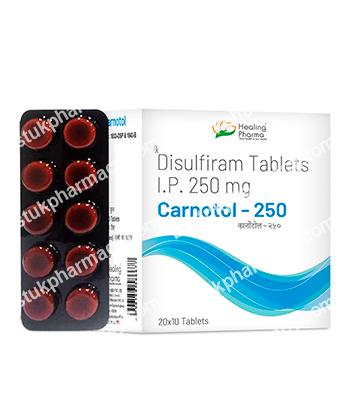
Antabuse (disulfiram) is an alcohol deterrent agent indicated as an adjunctive treatment in the management of selected, motivated patients with alcohol dependence, used within a comprehensive treatment programme that includes psychological, social, and behavioural support. It works by irreversibly inhibiting the enzyme acetaldehyde dehydrogenase in the liver, which is responsible for the oxidation of acetaldehyde, the primary metabolite of ethanol. When alcohol is consumed during disulfiram therapy, acetaldehyde accumulates in the blood to concentrations 5 to 10 times higher than normal, producing a constellation of highly unpleasant and aversive symptoms known as the disulfiram-alcohol reaction. This reaction serves as a powerful psychological deterrent, conditioning the patient to associate alcohol consumption with severe physical distress. Disulfiram does not reduce alcohol craving or treat the underlying dependence; its value lies entirely in its capacity to enforce abstinence through the threat of a predictable, unpleasant reaction should the patient drink.
Usual adult dose: The initial dose is 500 mg taken once daily for 1 to 2 weeks. Thereafter, the maintenance dose is 250 mg once daily, with a usual maintenance range of 125 mg to 500 mg, not exceeding 500 mg daily. Treatment should only be initiated after the patient has abstained from alcohol for at least 24 hours, and ideally for 48 to 72 hours, to avoid precipitating a reaction at the first dose. The tablet should be taken in the morning, with or after food, and swallowed whole with a full glass of water. The patient must be fully informed and give written or documented consent before starting treatment, understanding the nature and severity of the disulfiram-alcohol reaction. Therapy should be continued until the patient has established a stable foundation of sobriety and developed adequate psychosocial coping mechanisms, typically for 3 to 12 months, though some patients may benefit from long-term maintenance. Disulfiram should be used with extreme caution in patients with hepatic impairment, renal impairment, hypothyroidism, epilepsy, diabetes mellitus, or cardiovascular disease. A full physical examination, baseline liver function tests, and a complete blood count should be performed before initiating therapy and monitored regularly thereafter. The drug is contraindicated in patients with severe hepatic impairment, severe cardiovascular disease, psychosis, or cognitive impairment that prevents understanding of the consequences of the disulfiram-alcohol reaction.
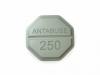
Dosage form: Tablets: 250 mg (white, round, flat, bevelled edge, scored on one side) and 500 mg (white, round, flat, bevelled edge, scored on one side). Both strengths are scored and may be divided into equal halves. The tablets should be kept in a tightly closed container, protected from light and moisture, as disulfiram is susceptible to degradation.
Onset of action: Disulfiram is slowly and incompletely absorbed from the gastrointestinal tract, with peak plasma concentrations reached approximately 8 to 12 hours after an oral dose. The enzyme-inhibitory effect on acetaldehyde dehydrogenase develops within 12 to 24 hours of the first dose and reaches maximum intensity after 2 to 3 days of continuous daily administration. Once enzyme inhibition is fully established, even small amounts of alcohol, equivalent to as little as 7 mL of spirits or a single unit of alcohol, can precipitate a reaction. The sensitivity of the response increases with the cumulative duration of disulfiram therapy, meaning that patients on long-term treatment may react more severely to smaller quantities of alcohol.
Duration of action: Disulfiram produces irreversible inhibition of acetaldehyde dehydrogenase; therefore, the duration of the drug effect is governed not by the pharmacokinetic half-life of disulfiram itself, which is approximately 60 to 120 hours, but by the rate of de novo synthesis of new enzyme. Significant enzyme inhibition persists for 5 to 7 days after the last dose, and measurable inhibition may last for up to 2 weeks. This prolonged effect means that a disulfiram-alcohol reaction can be triggered by alcohol consumed up to 7 to 14 days after discontinuation, and patients must be clearly warned of this extended window of risk. The drug undergoes extensive hepatic metabolism, and its metabolites, including diethyldithiocarbamate and carbon disulfide, are excreted slowly in the urine and exhaled air, contributing to the prolonged pharmacodynamic effect.
Alcohol recommendation: Alcohol in all forms must be completely and strictly avoided during treatment with Antabuse and for at least 14 days after the last dose. This absolute prohibition extends to all sources of alcohol, including alcoholic beverages of any strength, alcohol-containing foods (such as sauces, desserts, and confectionery), alcohol-based mouthwashes and gargles, aftershaves, perfumes, and topical preparations that contain ethanol, and any liquid medicines that contain alcohol as an excipient. The disulfiram-alcohol reaction is characterised by intense facial flushing, throbbing headache, nausea and copious vomiting, diaphoresis, chest pain, dyspnoea, hyperventilation, tachycardia, palpitations, hypotension, dizziness, blurred vision, and a sense of impending doom. In severe cases, the reaction can progress to respiratory depression, cardiovascular collapse, myocardial infarction, acute congestive heart failure, unconsciousness, convulsions, and death. The intensity of the reaction is proportional to the dose of disulfiram and the quantity of alcohol consumed. Severe reactions require hospitalisation for supportive care, intravenous fluids, oxygen, and cardiovascular monitoring. Patients must be instructed to read product labels carefully and to avoid even inadvertent exposure to hidden sources of alcohol.
Most common side effects: Drowsiness, fatigue, and lethargy are the most frequently reported adverse effects in the absence of alcohol, particularly during the initial weeks of therapy. These effects often diminish with continued treatment or dose adjustment. A metallic or garlic-like aftertaste in the mouth is also common and is related to the excretion of carbon disulfide, a metabolite of disulfiram, in the breath. Gastrointestinal disturbances, including nausea, vomiting, and abdominal discomfort, may occur, particularly at higher doses. Dermatological reactions, including acneiform eruptions, allergic dermatitis, and urticaria, have been reported. Peripheral neuropathy, manifesting as numbness, tingling, and weakness in the distal extremities, is a well-recognised and potentially dose-limiting adverse effect that occurs most commonly in patients receiving doses above 250 mg daily or in those with pre-existing nutritional deficiencies. Optic neuritis has also been reported and may present with blurred vision, colour vision disturbance, or scotomata; it is an indication for immediate discontinuation. Hepatotoxicity is the most serious adverse effect of disulfiram, ranging from mild, asymptomatic transaminase elevation to severe fulminant hepatitis and hepatic failure, which may be fatal. Hepatitis most commonly occurs within the first 2 to 8 weeks of treatment and is thought to represent an idiosyncratic hypersensitivity reaction, although dose-related toxicity is also possible. Liver function tests should be monitored at baseline, at 2 weeks, at 4 weeks, and every 3 to 6 months thereafter; the drug should be discontinued immediately if transaminases exceed three times the upper limit of normal or if symptoms of hepatitis, such as jaundice, fatigue, right upper quadrant pain, or dark urine, develop. Psychotic reactions, including confusion, paranoia, and hallucinations, have been reported rarely and are more common in patients with pre-existing psychiatric conditions and those receiving high doses or concurrent medications that increase dopamine levels. Disulfiram also inhibits dopamine beta-hydroxylase, leading to accumulation of dopamine and depletion of noradrenaline, which may contribute to both psychiatric and neurological adverse effects.
Would you like to try Antabuse (Disulfiram) without a prescription?


| Country | Shipping method | Delivery time | Price | |
|
|
 Delivery Delivery |
14-21 days | 14.95$ | Tracking# available in 4 days |
 Delivery Delivery |
9-14 days | 30$ | Tracking# available in 2 days |
At our pharmacy, you can buy Antabuse without a prescription, with discreet and anonymous packaging delivered within 5-14 days across the UK.
Antabuse contains disulfiram, a drug used to support abstinence from alcohol. It does not reduce craving. It does not ease withdrawal. It does not make you feel better when you are sober. What it does is make you violently ill if you drink. That is its mechanism, and it is upfront about it. The drug blocks the breakdown of alcohol at the acetaldehyde stage. Acetaldehyde is toxic. It is what causes hangover symptoms in a normal person, but in small amounts that are rapidly cleared. On disulfiram, acetaldehyde accumulates to levels five to ten times higher than normal. The result is a reaction that is deliberately unpleasant and occasionally dangerous. The knowledge of that reaction is the deterrent.
The standard starting dose is 500 mg once daily for the first 1 to 2 weeks. After that, the maintenance dose is 250 mg daily. Some patients remain on 500 mg if the lower dose does not produce a sufficiently aversive response when tested against a small amount of alcohol under controlled conditions. The tablet comes in two strengths, 250 mg and 500 mg. Treatment should be initiated only after the patient has been alcohol-free for at least 24 hours, and ideally longer. The drug is not a cure for alcohol dependence. It is a tool that buys time for the psychological and social aspects of recovery to take hold.
Disulfiram irreversibly inhibits aldehyde dehydrogenase, the enzyme that converts acetaldehyde to acetic acid. Alcohol is metabolised by alcohol dehydrogenase to acetaldehyde, and then by aldehyde dehydrogenase to acetate, which is harmless. Block the second step, and acetaldehyde builds up. Within 5 to 10 minutes of drinking even a small amount of alcohol, the patient experiences flushing, throbbing headache, nausea, vomiting, palpitations, and hypotension. The reaction peaks at 20 to 30 minutes and can last for hours. In severe cases, particularly with large alcohol intake, it can cause respiratory depression, cardiac arrhythmia, and collapse. The reaction is the point. It is a chemical leash that makes drinking physically impossible without suffering.
Disulfiram is absorbed slowly from the gut, with peak plasma levels 8 to 12 hours after dosing. It is highly lipid-soluble and distributes widely into tissues. The inhibition of aldehyde dehydrogenase is irreversible. The enzyme must be resynthesised, which takes about 5 to 14 days after the last dose. This means the reaction can occur for up to 2 weeks after stopping the drug. The drug itself is metabolised in the liver, and its metabolites are excreted in urine and faeces. The half-life of the parent drug is about 60 to 120 hours, but the pharmacodynamic half-life, the duration of enzyme inhibition, is what matters clinically.
Take it once daily, in the morning. If it causes sedation, which it does in some patients, take it at night. Taking it with food reduces gastrointestinal upset. The tablet can be crushed and mixed with water or juice if swallowing is difficult, though the taste is bitter. The patient must be alcohol-free for at least 24 hours before the first dose. The longer the period of sobriety before starting, the safer the initiation. Liver function tests should be checked before starting and periodically during treatment.
If you forget a dose, take it as soon as you remember. If it is nearly time for the next dose, skip the missed one. Do not double up. A missed dose means the aldehyde dehydrogenase activity begins to recover. If you have missed several doses, the protection fades. Do not assume you are covered if you have been off the drug for more than a few days. A test dose of alcohol under supervision is sometimes used to confirm the reaction is still present, but this is done in a clinical setting, not at home.
Do not drink alcohol while taking Antabuse. This includes alcohol in sauces, desserts, mouthwashes, cough syrups, and aftershaves that might be ingested. The reaction can be triggered by small amounts. Read labels. Avoid anything containing ethanol. The reaction is not a hangover. It is not something you can push through. It can be life-threatening in susceptible individuals. The message must be unambiguous: no alcohol in any form.
Without alcohol, disulfiram is relatively well tolerated. Drowsiness and fatigue are the most common complaints, affecting about 10% to 20% of patients. This often improves after the first few weeks. Metallic or garlic-like aftertaste is reported. Headache, reduced libido, and skin rash occur in a minority. Acneiform eruptions can appear on the face and back. Peripheral neuropathy is a rare but serious side effect associated with prolonged use and higher doses. Numbness, tingling, and pain in the hands and feet can develop gradually. It is usually reversible if the drug is stopped early. Continuing through neuropathic symptoms risks permanent nerve damage.
Hepatotoxicity is the most serious adverse effect. Disulfiram can cause hepatitis, ranging from mild transaminase elevations to fulminant hepatic failure. The risk is highest in the first few months of treatment. Baseline liver function tests are essential, and monitoring at 2 weeks, 4 weeks, and then every 3 to 6 months is standard. Symptoms of hepatitis, jaundice, dark urine, right upper quadrant pain, nausea, and fatigue, should prompt immediate cessation of the drug and urgent liver function tests. A patient who develops jaundice on disulfiram must stop it permanently.
Psychiatric side effects include confusion, psychosis, and depression. Disulfiram inhibits dopamine beta-hydroxylase, the enzyme that converts dopamine to noradrenaline. This can increase dopamine levels in the brain, which in susceptible individuals can trigger psychotic symptoms. A history of psychosis is a contraindication. If a patient on disulfiram develops hallucinations, paranoia, or severe confusion, the drug is stopped and psychiatry consulted.
Cardiovascular disease, coronary artery disease, heart failure, hypertension, is a relative contraindication. The disulfiram-alcohol reaction causes profound hypotension and tachycardia. In a patient with compromised cardiac reserve, this can trigger myocardial infarction or stroke. A cardiac assessment is needed before starting if there is any doubt about cardiovascular fitness.
Severe liver disease is an absolute contraindication. Disulfiram is metabolised in the liver and can cause hepatotoxicity. A patient with cirrhosis or active hepatitis cannot take it. Mild to moderate liver enzyme elevation that is due to recent alcohol intake and expected to improve with abstinence is a different situation. The enzymes should be checked after a period of sobriety, and the decision to start is made when the trend is improving.
Pregnancy is a contraindication. Disulfiram crosses the placenta. The data in human pregnancy are limited, and the risk of the disulfiram-alcohol reaction during pregnancy, hypotension and foetal hypoxia, is unacceptable. A pregnant woman with alcohol dependence needs specialist addiction and obstetric care. Disulfiram is not part of that care. Breastfeeding is not recommended. Disulfiram and its metabolites are excreted in milk, and the effects on the infant are unknown.
Psychosis, current or past, is a contraindication because of the dopamine beta-hydroxylase inhibition. A patient with bipolar disorder or schizophrenia should not take disulfiram unless the psychiatric team has explicitly agreed it is safe. Diabetes requires caution. The disulfiram-alcohol reaction can cause hypoglycaemia, and the nausea and vomiting can make it difficult to maintain oral intake. Blood glucose should be monitored closely in the first weeks of treatment.
Older adults can take disulfiram, but they are more vulnerable to the hypotensive effects of the alcohol reaction and to neurotoxicity. Starting at 250 mg daily rather than 500 mg is sensible. The risk of peripheral neuropathy increases with age and cumulative dose. Older patients with a long history of alcohol dependence may have subclinical neuropathy that disulfiram can unmask or worsen.
Disulfiram itself can cause drowsiness and fatigue. If you are affected, do not drive. The sedation is usually worse in the first few weeks. Once you are stable on a maintenance dose and alert during the day, driving is generally safe. The real driving risk is not the drug. It is the alcohol reaction. A patient who decides to drink while on disulfiram and then attempts to drive during the reaction is a danger to themselves and others. The hypotension, vomiting, and confusion of the reaction make driving impossible. The message is simple: do not drink, and this scenario never arises.
Avoid all alcohol. This includes obvious sources like beer, wine, and spirits, and hidden sources like cooking wine, vinegar-based sauces that have not been fully reduced, alcohol-containing mouthwashes, and some over-the-counter cough syrups. The threshold for triggering a reaction is low. A tablespoon of wine in a sauce is enough to cause flushing and headache in a sensitive patient. Read labels. If you are unsure, do not consume it. The reaction is not a test of willpower. It is a pharmacological inevitability.
Warfarin and other coumarin anticoagulants are potentiated by disulfiram. The INR can rise significantly. The mechanism is inhibition of warfarin metabolism. INR should be checked within a few days of starting disulfiram and the warfarin dose adjusted. The interaction is predictable and manageable, but it must be anticipated.
Phenytoin levels rise when disulfiram is added. Phenytoin toxicity, nystagmus, ataxia, slurred speech, can develop within days to weeks. Phenytoin levels should be checked before starting disulfiram and monitored during treatment. The phenytoin dose often needs to be reduced.
Isoniazid, used for tuberculosis, can compound the neurotoxic effects of disulfiram. Both drugs can cause peripheral neuropathy. The combination increases the risk. If a patient on disulfiram needs isoniazid, pyridoxine supplementation should be given, and neurological symptoms monitored closely.
Metronidazole can cause a disulfiram-like reaction with alcohol on its own. Adding disulfiram to metronidazole increases the risk of a severe reaction if alcohol is consumed. This is not a direct drug-drug interaction but an additive pharmacodynamic effect. The combination should be used with caution and the patient warned that the reaction to any alcohol exposure will be more severe.
Benzodiazepines and other CNS depressants have additive sedative effects with disulfiram. The drowsiness that disulfiram causes can be amplified. This is usually managed by adjusting the timing of doses. If a patient is on diazepam for alcohol withdrawal, the benzodiazepine should be tapered before disulfiram is started, or the doses should be separated as much as possible.
Acamprosate is a drug that reduces craving and supports abstinence through a different mechanism. It modulates glutamate and GABA neurotransmission, normalising the dysregulated brain chemistry that follows chronic alcohol use. It does not cause a reaction with alcohol. It is taken three times daily, which is a compliance challenge. It is renally excreted and requires dose adjustment in renal impairment. It is less dramatic than disulfiram but has a better evidence base for reducing relapse in motivated patients.
Naltrexone reduces the rewarding effects of alcohol. It blocks opioid receptors in the brain's reward pathway. A patient on naltrexone who drinks gets less euphoria. Over time, the association between drinking and reward weakens, and craving diminishes. It is taken once daily or as a monthly intramuscular injection for patients who struggle with daily adherence. Naltrexone can be combined with disulfiram in specialist settings, though the combination is not routine.
Psychosocial interventions are the foundation of alcohol dependence treatment. Cognitive behavioural therapy, motivational interviewing, and residential rehabilitation programmes address the behavioural and psychological drivers of drinking. Medication supports abstinence. It does not create it. A patient on disulfiram without any psychological support is less likely to succeed than one who is also engaged in therapy. Mutual aid groups like Alcoholics Anonymous provide peer support and structure. The 12-step model is not for everyone, but it is widely available and costs nothing.
Supervised disulfiram administration can improve adherence. A family member, partner, or healthcare professional watches the patient take the tablet each day. This removes the daily decision about whether to take it. It is particularly useful in the early stages of treatment when motivation is fragile. Some community alcohol teams and GP practices offer this service.
INN (International Nonproprietary Name): Disulfiram
Available brand names in the UK: Antabuse, and generic disulfiram products
ATC code: N07BB01
Forms and strengths: Tablets: 200 mg, 250 mg, 500 mg. The 200 mg and 250 mg tablets are the standard UK maintenance dose. The 500 mg tablet is used for initial loading and for patients who need a higher maintenance dose.
Manufacturers: Actavis (Antabuse), and diverse generic manufacturers including Wockhardt, Zentiva, and Alliance Pharmaceuticals
Registration status in the UK: Registered as a Prescription Only Medicine (POM). Disulfiram is typically initiated by a specialist addiction service or a GP with experience in substance misuse. It is not suitable for prescribing without a full assessment of the patient's medical and psychiatric history.
Classification: Prescription Only Medicine (POM)
The 250 mg tablet is the standard maintenance dose. The 500 mg tablet is for the initial 1 to 2 weeks of treatment and for patients who do not have an adequate reaction on 250 mg. A patient who drinks on 250 mg and has only mild flushing may need 500 mg. The adequacy of the reaction is sometimes tested with a supervised alcohol challenge, but this practice is now less common and is done only in specialist centres with resuscitation equipment available.
Generic disulfiram and branded Antabuse are bioequivalent. The tablets are small and easily swallowed. They can be crushed for patients who cannot swallow tablets whole. Crushed tablets mixed in water, juice, or soft food are acceptable. The bitter taste is the main limitation. Supervised administration often involves dispersing the tablet in water and watching the patient drink it, which confirms the dose has been taken.
What happens if I drink alcohol on Antabuse?
Within 5 to 10 minutes, you will experience flushing, throbbing headache, nausea, vomiting, palpitations, chest pain, and a sense of impending doom. The reaction peaks at 20 to 30 minutes and can last for hours. The severity depends on the amount of alcohol and the dose of disulfiram. A small amount of alcohol produces a mild reaction. A large amount can cause respiratory depression, cardiac arrhythmia, and collapse. This is a medical emergency. If a severe reaction occurs, call 999.
How long after stopping Antabuse can I drink safely?
Aldehyde dehydrogenase activity recovers over 5 to 14 days. A minimum of 7 days is recommended. Some patients retain sensitivity for up to 2 weeks. The response is individual. Do not assume you can drink at 7 days and be fine. A small test amount in a safe environment is the cautious approach, but complete abstinence is the goal of treatment. If the goal is to return to drinking, disulfiram is the wrong drug.
Can I use mouthwash or aftershave on Antabuse?
Topical use of alcohol-containing products is generally safe. The amount absorbed through intact skin is negligible. Mouthwash that is swished and spat out carries a small risk if it contains ethanol, because some is inevitably swallowed. Use alcohol-free mouthwash. Aftershave applied to the face is not a problem unless you drink it. Be sensible. Avoid any product that might result in ingestion of ethanol.
Does Antabuse stop cravings?
No. Disulfiram does not affect craving. It provides a deterrent. The knowledge that drinking will make you severely ill changes the calculation. The craving may still be there. The drug buys time for the craving to diminish with abstinence and for psychological work to be done. A patient who expects disulfiram to take away the desire to drink will be disappointed. It is a barrier, not a treatment for craving.
Can I take Antabuse if I have liver disease?
Active liver disease, hepatitis, cirrhosis, is a contraindication. Mild elevation of liver enzymes that is expected to resolve with abstinence is different. Liver function should be checked before starting and monitored during treatment. If transaminases rise to more than three times the upper limit of normal during treatment, disulfiram should be stopped. The liver enzyme elevation is usually reversible. Continuing the drug through rising enzymes risks fulminant hepatitis.
We ship Antabuse to all parts of the United Kingdom. Delivery times depend on your location:
All shipments are packed discreetly with no branding or indication of contents on the outside. At our pharmacy, you can purchase Antabuse without a prescription, with delivery across the UK.


