Menu


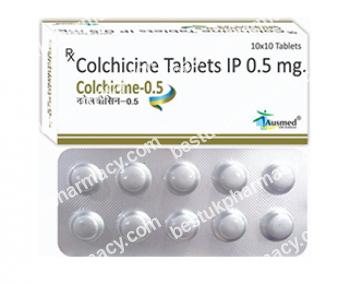
Colchicine is an alkaloid extracted from the autumn crocus (Colchicum autumnale) with anti-inflammatory and antimitotic properties. It is indicated for the treatment of acute gouty arthritis when non-steroidal anti-inflammatory drugs (NSAIDs) are contraindicated, ineffective, or not tolerated. It is also used for the prophylaxis of recurrent gout attacks, particularly during the initiation of urate-lowering therapy with allopurinol or febuxostat. Additionally, colchicine is indicated for the management of familial Mediterranean fever (FMF) and for the treatment of acute and recurrent pericarditis as an adjunct to standard anti-inflammatory therapy. Colchicine works by binding to tubulin, inhibiting microtubule polymerisation, which disrupts intracellular trafficking, reduces leucocyte migration, and suppresses the inflammatory response to monosodium urate crystals deposited in joints. It also inhibits the assembly of the NLRP3 inflammasome, blocking the release of interleukin-1 beta, a key mediator in gouty inflammation.
Usual adult dose: For acute gout: 0.5 mg (500 micrograms) two to four times daily until pain relief is achieved or gastrointestinal toxicity develops, with a maximum total dose of 6 mg (12 tablets) over a course of treatment. After completing a course, a minimum interval of three days must elapse before a further course is initiated. Modern UK guidance increasingly recommends a lower-dose regimen of 0.5 mg two to three times daily with a maximum total dose of 3 mg per course to reduce toxicity while preserving efficacy. For gout prophylaxis: 0.5 mg once or twice daily, commonly used when initiating urate-lowering therapy and continued for at least the first 3 to 6 months of treatment. For familial Mediterranean fever: 1.0 to 2.0 mg daily in divided doses, with dose adjustments based on clinical response and tolerability. For acute pericarditis: 0.5 mg twice daily for 3 months, with a subsequent tapering regimen over several weeks, typically in combination with an NSAID. The dose should be reduced in elderly patients, in patients with renal impairment (eGFR below 50 mL/min), and in those with hepatic impairment. Colchicine is contraindicated in patients with severe renal impairment (eGFR below 10 mL/min) or in those receiving concomitant potent CYP3A4 and P-glycoprotein inhibitors.
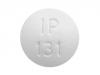
Dosage form: Tablets: 0.5 mg (500 micrograms), typically small, white to pale yellow, round, and uncoated. The tablets should be swallowed whole with a glass of water and may be taken with or without food. The 500 microgram tablet is the standard UK formulation, and care must be taken not to confuse this with higher-strength preparations available in some other countries.
Onset of action: In acute gout, the anti-inflammatory effect of colchicine begins within 12 to 24 hours of the first dose, with maximal symptom relief usually achieved within 48 to 72 hours. The rapidity of response is most pronounced when treatment is initiated at the very first sign of an acute attack. Delaying treatment by more than 24 hours after symptom onset markedly reduces efficacy. Peak plasma concentrations are reached 0.5 to 2 hours after oral administration. For pericarditis, clinical response, including reduction in chest pain and C-reactive protein levels, is typically observed within 24 to 72 hours.
Duration of action: Colchicine has a biphasic elimination profile, with a distribution half-life of approximately 20 hours and a prolonged terminal elimination half-life of approximately 30 hours, extending to over 60 hours in patients with significant renal impairment. The drug undergoes extensive enterohepatic recirculation, which contributes to its prolonged biological activity and also to its gastrointestinal toxicity. A single dose or short course of colchicine remains biologically active for several days, which is why repeat courses should be separated by at least 72 hours to prevent cumulative toxicity.
Alcohol recommendation: Alcohol consumption should be strictly avoided during treatment with colchicine. Alcohol itself is a well-established trigger for acute gout attacks through its hyperuricaemic effects, promoting both increased uric acid production and impaired renal urate excretion. Alcohol may also exacerbate the gastrointestinal adverse effects of colchicine, particularly nausea, vomiting, and diarrhoea. Furthermore, chronic alcohol consumption can impair hepatic drug metabolism and may increase the risk of colchicine-induced hepatotoxicity. Patients using colchicine for gout should be strongly counselled to abstain from alcohol entirely during acute attacks and to limit intake during prophylactic therapy.
Most common side effects: Gastrointestinal toxicity is dose-limiting and the most common adverse effect, with nausea, vomiting, abdominal cramping, and profuse watery diarrhoea occurring in the majority of patients at therapeutic doses. These effects are an early sign of colchicine toxicity and usually require dose reduction or temporary discontinuation; they typically resolve within 24 to 48 hours of stopping the drug. Other common side effects include bloating and abdominal distension. Bone marrow suppression, including leucopenia, thrombocytopenia, and aplastic anaemia, may occur with prolonged use, particularly at higher doses or in patients with renal impairment. Myopathy and neuropathy, including rhabdomyolysis and ascending peripheral neuritis, are recognised complications of chronic therapy, especially when co-administered with statins or in the context of renal insufficiency. Alopecia and skin rashes have been reported. In overdose, colchicine is extremely toxic, with a narrow therapeutic index, and can cause multiorgan failure, severe bone marrow suppression, and cardiovascular collapse, often with delayed onset of 24 to 72 hours; urgent medical attention is required for any suspected overdose.
Would you like to try Colchicine without a prescription?


| Country | Shipping method | Delivery time | Price | |
|
|
 Delivery Delivery |
14-21 days | 14.95$ | Tracking# available in 4 days |
 Delivery Delivery |
9-14 days | 30$ | Tracking# available in 2 days |
At our pharmacy, you can buy Colchicine without a prescription, with discreet and anonymous packaging delivered within 5-14 days across the UK.
Colchicine is an ancient drug. It was extracted from the autumn crocus, Colchicum autumnale, and used for joint pain as far back as ancient Egypt. It is still used today for acute gout flares and for prevention of gout attacks when starting urate-lowering therapy. It is also a mainstay in familial Mediterranean fever, a hereditary autoinflammatory condition, where it prevents both the acute attacks and the long-term complication of amyloidosis. More recently, it found a role in pericarditis. The mechanism is anti-inflammatory, not analgesic. It does not mask pain. It dampens the inflammatory cascade that drives it.
The dose for an acute gout flare is 500 micrograms (0.5 mg) taken two to four times daily until the pain subsides or gastrointestinal side effects appear. The maximum dose in a 24-hour period is 2.5 mg. The old practice of dosing until diarrhoea develops is no longer recommended. Toxicity and efficacy are uncomfortably close neighbours with this drug. For gout prophylaxis when starting allopurinol or febuxostat, 500 micrograms once or twice daily is standard, continued for 3 to 6 months. For familial Mediterranean fever, the dose is 500 micrograms to 2 mg daily, split across the day. The tablets come in a single strength, 500 micrograms. That is the unit. Everything is built around it.
Colchicine binds to tubulin, the protein that polymerises into microtubules. That binding inhibits microtubule assembly. White blood cells need microtubules to migrate toward sites of inflammation, to phagocytose urate crystals, and to release inflammatory mediators. By disrupting that cytoskeletal infrastructure, colchicine stops neutrophils from piling into the joint and unleashing the inflammatory response that makes gout so exquisitely painful. It also inhibits the NLRP3 inflammasome, which is the intracellular complex that activates interleukin-1 beta in response to urate crystals. That is a more recent piece of the puzzle. The drug has been in use for millennia, but the inflammasome connection was worked out only in the last couple of decades.
It is absorbed rapidly from the gut, with peak plasma levels about an hour after dosing. Bioavailability is variable, ranging from 25% to 55%. It undergoes extensive first-pass metabolism and enterohepatic recirculation, which partly explains why gastrointestinal toxicity is the first sign of overdose. The drug is metabolised by CYP3A4 and is a substrate for P-glycoprotein. That creates a web of clinically significant drug interactions. Excretion is primarily biliary and renal. The half-life is about 10 to 30 hours in people with normal renal function, but it stretches significantly when kidney function declines. The therapeutic window is narrow. The toxic dose is not much higher than the therapeutic one.
For an acute gout attack, start as early as possible. The drug works best in the first 12 to 24 hours of a flare. Take 500 micrograms (one tablet) two to four times daily. In UK practice, a common regimen is 500 micrograms three times daily for 2 days, then twice daily for another 2 days, then stop. Some clinicians use a lower-intensity schedule, 500 micrograms twice daily for 3 to 5 days. The variable schedules reflect the reality that no single regimen has been shown to be clearly superior. The consistent message is this: stop when the pain is controlled, and stop before diarrhoea forces you to. Do not exceed 2.5 mg (five tablets) in 24 hours. Doses above that do not work better. They just poison you faster.
For prophylaxis, 500 micrograms once or twice daily is standard. If renal impairment is present, the dose should be reduced. An eGFR between 30 and 50 mL/min calls for 500 micrograms once daily, or on alternate days if gastrointestinal symptoms appear. An eGFR below 30 mL/min is a relative contraindication. Colchicine is not removed by dialysis, and toxicity risk in this group is high. If prophylaxis is essential, it should be managed by a specialist with extended dosing intervals.
If you forget a dose during an acute attack, take it as soon as you remember unless it is nearly time for the next one. If it is close to the next dose, skip the missed one. Do not double up. If you miss a prophylactic dose, take it when you remember and then return to the normal schedule. Doubling a prophylactic dose is unnecessary and risks gastrointestinal upset that undermines adherence.
Gastrointestinal toxicity is the limiting factor. Nausea, vomiting, abdominal pain, and diarrhoea occur in up to 80% of patients at therapeutic doses. This is not an allergy. It is a direct effect of colchicine on the rapidly dividing cells of the gut epithelium. Microtubule inhibition hits the tissues with the highest cell turnover hardest. When diarrhoea starts, the dose is too high or the duration has been too long. Stop the drug. The diarrhoea will resolve, usually within 24 to 48 hours. Continuing through diarrhoea is how you get from therapeutic toxicity to myelosuppression and multi-organ failure.
Bone marrow suppression is the most serious dose-dependent toxicity. Neutropenia, thrombocytopenia, and aplastic anaemia can occur after prolonged high-dose use or in patients with impaired clearance. The bone marrow, like the gut, has rapidly dividing cells. Colchicine hits them the same way. This is rare at prophylactic doses but can develop insidiously. A full blood count is checked periodically in patients on long-term colchicine, particularly those with renal impairment or those taking interacting drugs.
Myopathy and rhabdomyolysis have been reported, usually in patients with renal impairment taking standard doses for prolonged periods. Muscle pain, weakness, and elevated creatine kinase signal the problem. The drug is stopped, and the muscle recovers over weeks. Peripheral neuropathy, predominantly sensory, can occur with long-term use. It presents as numbness and tingling in the hands and feet. It is often under-recognised until it has been present for months. It improves slowly after discontinuation.
Alopecia and rash are less common. Transient hair loss can occur after prolonged use, and it regrows when the drug is stopped. A maculopapular rash is occasionally reported. These are minor compared to the marrow and muscle effects, but they are worth knowing about so they do not trigger unnecessary investigations.
Renal impairment is the single most important risk factor for colchicine toxicity. As eGFR falls, the drug accumulates. The half-life can extend to 30 to 40 hours or more. Dose adjustment is essential. A patient on dialysis who receives a standard colchicine regimen for acute gout can develop pancytopenia, myopathy, and sepsis over days to weeks. This has happened. The published case reports are sobering. Colchicine can be used in renal impairment, but the dose must be reduced, the duration shortened, and the patient monitored for early signs of toxicity.
Hepatic impairment also reduces clearance. In severe liver disease, colchicine should be avoided or used at reduced doses with close monitoring. The combination of renal and hepatic impairment is particularly dangerous because both routes of elimination are compromised.
Pregnancy is a grey area. Colchicine crosses the placenta. The data come largely from women with familial Mediterranean fever who continued colchicine during pregnancy, and in that population, the drug has not been associated with a clear increase in congenital malformations. For gout, which is rare in pregnancy, the drug is generally avoided. For familial Mediterranean fever, the benefit of preventing amyloidosis often outweighs the uncertain risk. This is a decision for a specialist, not one to make in primary care.
Breastfeeding is considered compatible with colchicine. Levels in breast milk are low, and adverse effects in nursing infants have not been reported. The British National Formulary lists it as safe in lactation at standard doses.
Older adults are more vulnerable to colchicine toxicity because renal function declines with age even when serum creatinine looks normal. An eGFR should be measured before starting. Frailty, low body weight, and polypharmacy compound the risk. Starting at 500 micrograms once daily for prophylaxis is prudent. If an acute flare needs treating, a shorter course with a lower total dose, 500 micrograms twice daily for 3 days, is often sufficient.
Colchicine does not impair alertness or coordination. Driving is fine. The practical concern is gastrointestinal urgency. If you are on an acute dosing regimen and diarrhoea strikes, you need to be near a toilet. A long drive on the second day of a gout flare treated with colchicine is a logistical gamble.
Alcohol does not interact directly with colchicine in a pharmacokinetic sense. But alcohol is a potent trigger for gout attacks. Drinking during a flare is counterproductive. During prophylactic treatment, heavy alcohol consumption undermines the point of being on prophylaxis. Moderate drinking, a few units a week, is less of an issue but still raises urate levels. If gout is recurrent and colchicine is being used to cover the start of allopurinol, reducing alcohol intake improves the chance that the allopurinol will work at a lower dose.
The interaction list is dominated by CYP3A4 and P-glycoprotein inhibitors. Clarithromycin and erythromycin are the most commonly encountered. A patient stable on colchicine prophylaxis who is prescribed clarithromycin for a chest infection can develop colchicine toxicity within days. The interaction is severe and can be fatal. If a macrolide is essential, the colchicine should be stopped or the dose drastically reduced for the duration of the antibiotic course. Azithromycin is a safer alternative in this context because it does not inhibit CYP3A4 to the same degree.
Azole antifungals, ketoconazole, itraconazole, fluconazole, voriconazole, are potent inhibitors. The combination with colchicine is best avoided. If necessary, the colchicine dose must be reduced and the patient closely monitored. Ritonavir and other protease inhibitors are CYP3A4 inhibitors and P-glycoprotein inhibitors. Colchicine toxicity has been reported in HIV patients on ritonavir-boosted regimens who received standard colchicine doses for gout.
Verapamil and diltiazem, both CYP3A4 and P-glycoprotein inhibitors, can increase colchicine levels. The interaction is less dramatic than with macrolides or azoles, but it is clinically relevant. Cyclosporin is a P-glycoprotein inhibitor and can raise colchicine levels, with the added problem that cyclosporin itself is nephrotoxic, reducing colchicine clearance through a second mechanism. This combination requires careful monitoring of renal function, full blood count, and muscle symptoms.
Statins and colchicine can both cause myopathy. The combination of colchicine with atorvastatin, simvastatin, or rosuvastatin increases the risk of muscle toxicity beyond what either drug does alone. This is not a contraindication. Many patients take both safely. The risk is higher in renal impairment and in the elderly. Muscle symptoms, weakness, or pain should be investigated promptly with a creatine kinase level. Grapefruit juice inhibits CYP3A4 in the gut and can increase colchicine levels modestly. Large quantities should be avoided during acute treatment. The occasional glass with a meal is unlikely to cause problems.
For acute gout, NSAIDs are the other first-line option. Naproxen 500 mg twice daily or indometacin 50 mg three times daily are standard UK regimens. They work quickly and effectively. The contraindications, renal impairment, peptic ulcer disease, heart failure, limit their use in the population most likely to get gout. Corticosteroids, prednisolone 30 mg daily for 5 days, are as effective as NSAIDs and can be used when NSAIDs and colchicine are both unsuitable. Intra-articular corticosteroid injection is the definitive treatment for a monoarticular flare in a large joint. A single injection into the knee or ankle can abort a flare within 24 hours and avoids systemic drug exposure entirely.
For prophylaxis during the initiation of urate-lowering therapy, NSAIDs at low dose are sometimes used, but colchicine is preferred because it does not cause renal impairment or gastric toxicity with prolonged use. If colchicine is contraindicated, a low-dose corticosteroid or an interleukin-1 inhibitor like anakinra can be considered, though anakinra is reserved for refractory cases and is not a routine prophylactic agent in the NHS.
For familial Mediterranean fever, colchicine is irreplaceable. It is the only drug proven to prevent amyloidosis. In patients who cannot tolerate colchicine, interleukin-1 inhibitors are second-line. Anakinra and canakinumab are used, but they are expensive, injected, and require specialist rheumatology follow-up. They are not alternatives in any casual sense. Colchicine is the foundation.
Urate-lowering therapy is the long-term solution for recurrent gout. Allopurinol is first-line. Febuxostat is second-line. Both reduce serum urate. Neither treats acute pain. They are started during a flare-free period, covered by colchicine or NSAID prophylaxis, and titrated to a target serum urate below 360 micromol/L, or below 300 micromol/L if tophi are present. Once the target is reached and maintained, gout flares become progressively less frequent and eventually stop. Colchicine is the bridge that gets the patient through the initial months when urate-lowering therapy can paradoxically trigger flares.
INN (International Nonproprietary Name): Colchicine
Available brand names in the UK: Colchicine (generic). Branded preparations such as Colcrys are available in other countries but are not routinely used in the NHS.
ATC code: M04AC01
Forms and strengths: Tablets: 500 micrograms (0.5 mg); Oral solution is available as a special order for patients unable to swallow tablets.
Manufacturers: Diverse generic manufacturers including Wockhardt, Zentiva, and Accord. Historically, colchicine was an unlicensed medicine in the UK until licensed generic products became available.
Registration status in the UK: Registered as a Prescription Only Medicine (POM). Colchicine is widely available in UK pharmacies as a generic product.
Classification: Prescription Only Medicine (POM)
The 500 microgram tablet is the only standard strength. There is no 1 mg tablet, no 250 microgram tablet. The dose is adjusted by changing the number of tablets and the frequency, not the tablet strength. This simplifies prescribing but requires clear communication. A patient told to take "one tablet three times a day" needs to know that means 500 micrograms three times daily, and that exceeding five tablets in a day is dangerous.
Generic colchicine tablets are small, white, and uncoated. They are easy to swallow. The oral solution is a special-order product for patients with swallowing difficulties. It is more expensive, has a shorter shelf life, and is not routinely stocked. Most patients who cannot swallow tablets can have them crushed and dispersed in water, though this is off-label and should be confirmed with the dispensing pharmacist.
There is no fixed-dose combination of colchicine with any other drug. It is always prescribed as a single agent. The prescription should specify the dose in micrograms, not milligrams, to avoid the potentially catastrophic error of a tenfold overdose. Writing "500 micrograms" rather than "0.5 mg" is the safer practice.
How quickly does colchicine work for a gout attack?
Pain begins to improve within 12 to 24 hours if treatment is started early. The full effect builds over 24 to 48 hours. If there is no improvement at all by 48 hours, it is unlikely to work and an alternative, usually an NSAID or corticosteroid, should be considered. Starting colchicine late, 48 hours or more into a flare, reduces the response rate significantly.
What are the signs of colchicine toxicity?
Nausea, vomiting, and diarrhoea are the first signs. They can progress within hours to abdominal pain, dehydration, and electrolyte disturbance. Continued use leads to bone marrow suppression, neutropenia, thrombocytopenia, myopathy, rhabdomyolysis, and multi-organ failure. If diarrhoea starts, stop the drug immediately and seek medical advice. Do not take an anti-diarrhoeal and continue the colchicine. The diarrhoea is the signal to stop.
Can I take colchicine long term?
Yes, for the right indications. Patients with familial Mediterranean fever take it for life. Patients with recurrent pericarditis may take it for months to years. Patients with chronic gout who cannot tolerate urate-lowering therapy sometimes remain on low-dose colchicine prophylaxis indefinitely. Long-term use requires periodic monitoring of full blood count, renal function, and creatine kinase. The risk of myopathy and neuropathy increases with cumulative dose over years.
What should I do if I miss a dose during prophylaxis?
Take it as soon as you remember. If it is close to the next dose, skip the missed one. Do not take two tablets. A single missed prophylactic dose is unlikely to trigger a flare. Missing multiple doses over a week increases the risk. Consistency matters more than exact timing.
Can colchicine be used during pregnancy?
The best data come from women with familial Mediterranean fever who continued colchicine through pregnancy. In that population, it has not been linked to a clear increase in birth defects. For other indications, including gout, it is generally avoided. Amyloidosis from untreated familial Mediterranean fever is a greater risk to mother and foetus than colchicine. The decision is individual and should involve the rheumatologist and obstetric team together.
We ship Colchicine to all parts of the United Kingdom. Delivery times depend on your location:
All shipments are packed discreetly with no branding or indication of contents on the outside. At our pharmacy, you can purchase Colchicine without a prescription, with delivery across the UK.


