Menu


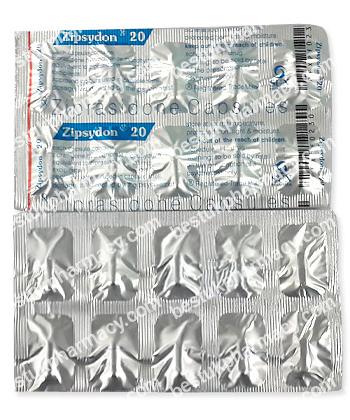
Geodon (ziprasidone hydrochloride) is an atypical antipsychotic agent indicated for the treatment of schizophrenia in adults, and for the treatment of acute manic or mixed episodes associated with bipolar I disorder, with or without psychotic features. Its therapeutic action is mediated through a combination of antagonist activity at dopamine D2 receptors and serotonin 5-HT2A receptors, along with agonist activity at 5-HT1A receptors and moderate inhibition of noradrenaline and serotonin reuptake. Geodon is notable for its relatively low propensity for weight gain, metabolic side effects, and sedation compared to some other atypical antipsychotics.
Usual adult dose: For schizophrenia and bipolar mania, the recommended starting dose is 40 mg twice daily taken with food. The dose may be increased, based on clinical response and tolerability, to a maximum of 80 mg twice daily. Dose adjustments should occur at intervals of not less than 2 days, as steady-state concentrations are achieved within 1 to 3 days. Bioavailability is significantly increased in the presence of food, doubling absorption compared to the fasted state; therefore, Geodon must always be taken with a meal of at least 500 calories. For maintenance therapy, patients should be maintained on the lowest effective dose.
Dosage form: Hard gelatin capsules: 20 mg (blue and white), 40 mg (blue), and 80 mg (blue and white). All capsules should be swallowed whole with a substantial meal, not opened, chewed, or crushed.
Onset of action: Initial symptom improvement in acute schizophrenia or mania may be observed within the first week of treatment, with significant antipsychotic and mood-stabilising effects typically developing over 2 to 4 weeks. Maximal therapeutic benefit in chronic conditions may require 6 to 8 weeks of continued treatment at an optimised dose.
Duration of action: The mean elimination half-life of ziprasidone is approximately 7 hours, supporting twice-daily dosing. Antipsychotic effect is maintained with consistent BID administration, and steady-state plasma levels are achieved within 1 to 3 days of repeated dosing.
Alcohol recommendation: Alcohol consumption should be avoided during treatment with Geodon. Alcohol may exacerbate central nervous system depressant effects, increasing the risk of sedation, orthostatic hypotension, and impaired cognitive and motor function. The combination may also potentiate the risk of QTc interval prolongation, a known adverse effect of ziprasidone. Patients should be advised not to drink alcohol while taking this medication.
Most common side effects: Somnolence, headache, dizziness, nausea, extrapyramidal symptoms (including akathisia, dystonia, and parkinsonism), and respiratory tract infections. Insomnia, agitation, and anxiety are also commonly reported. QTc interval prolongation is a dose-related cardiac effect, and an electrocardiogram should be considered prior to initiation in patients with cardiac risk factors. Ziprasidone is associated with a lower incidence of clinically significant weight gain, hyperglycaemia, and hyperlipidaemia compared with some other atypical antipsychotics.
Would you like to try Geodon (Ziprasidone) without a prescription?


| Country | Shipping method | Delivery time | Price | |
|
|
 Delivery Delivery |
14-21 days | 14.95$ | Tracking# available in 4 days |
 Delivery Delivery |
9-14 days | 30$ | Tracking# available in 2 days |
At our pharmacy, you can buy Geodon without a prescription, with discreet and anonymous packaging delivered within 5-14 days across the UK.
Geodon is an atypical antipsychotic. Its active ingredient, ziprasidone, is used to treat schizophrenia and acute manic or mixed episodes in bipolar disorder. It belongs to the second generation of antipsychotics, developed to offer efficacy against psychotic symptoms with a lower burden of movement disorders than older drugs like haloperidol. For someone stepping onto an antipsychotic for the first time, that distinction matters a great deal.
The starting dose for schizophrenia is usually 20 mg twice daily with food. That can step up to 80 mg twice daily based on response. The maximum is 100 mg twice daily, though doses above 80 mg twice daily are reserved for patients who do not respond to the standard range. For bipolar mania, the dose is 40 to 80 mg twice daily. It comes in capsules of 20 mg, 40 mg, and 80 mg. Food is not optional with Geodon. Taking it on an empty stomach cuts absorption by roughly half. A meal of at least 500 calories doubles the amount that reaches your bloodstream.
Ziprasidone blocks dopamine D2 and serotonin 5-HT2A receptors. That is the shared mechanism across most atypical antipsychotics. But its binding profile is messier and more interesting than just those two targets. It has high affinity for 5-HT1A as a partial agonist, 5-HT2C and 5-HT1D as an antagonist, and moderate affinity for alpha-1 adrenergic receptors and histamine H1 receptors. It also inhibits noradrenaline and serotonin reuptake, which gives it a mild antidepressant signal that separates it from purely dopaminergic drugs.
What it does not hit hard is the histamine H1 receptor and the muscarinic acetylcholine receptors. That translates into a lower propensity for weight gain and sedation compared to olanzapine or quetiapine. Ziprasidone is one of the more metabolically neutral antipsychotics. For a patient who gained 15 kg on olanzapine in six months, that profile is not theoretical, it changes the risk-benefit calculation entirely.
The half-life is about 7 hours with steady-state dosing. Twice-daily administration is needed to keep plasma levels in the therapeutic window. It is metabolised mainly by aldehyde oxidase and to a lesser extent by CYP3A4. Only a small fraction is excreted unchanged by the kidneys.
Take it with food. Every dose. The 500-calorie threshold is not a vague suggestion, it is the difference between getting the full dose and getting half of it. A sandwich, a bowl of cereal, a proper meal, not a black coffee and a piece of toast. If you skip the meal, you skip a significant portion of the drug.
Take it at the same times each day. Morning and evening doses roughly 12 hours apart keep blood levels steady. If you forget a dose, take it with food as soon as you remember. If it is within 4 hours of your next scheduled dose, skip the missed one. Do not double up. Doubling a 40 mg dose to 80 mg because you missed the morning one will spike the peak plasma concentration and increase the risk of QT prolongation and side effects.
The side effect profile is shaped by what ziprasidone does not do as much as what it does. Weight gain and sedation are less prominent than with olanzapine or quetiapine, which is why some clinicians reach for it when metabolic syndrome becomes a concern. But it has its own problems.
Somnolence still occurs. It affects around 15% of patients and tends to be dose-related. Taking the larger portion of the daily dose at night helps. Akathisia, a restless inability to sit still, is more common with ziprasidone than with some other atypicals. It feels like a motor restlessness that starts in the legs and spreads upward. Reducing the dose or adding a low-dose beta-blocker like propranolol can help, but it needs to be flagged early because it is often mistaken for worsening anxiety or agitation.
Extrapyramidal symptoms like tremor, rigidity, and dystonia are less common than with first-generation antipsychotics but still occur, particularly at doses above 80 mg twice daily. Nausea, dyspepsia, and dizziness show up in the first week or two and usually settle. Orthostatic hypotension, a drop in blood pressure on standing, can cause lightheadedness in the initial titration phase.
The one side effect that gets the most attention is QT prolongation. Ziprasidone prolongs the QTc interval by about 10 to 20 milliseconds on average, which is more than most other atypical antipsychotics. The clinical significance of this in a person with a healthy heart and normal electrolytes is debated, but it is not zero. Torsades de pointes has been reported, albeit rarely. In practice, this means you need an ECG and a check of potassium and magnesium before starting, and anyone with a pre-existing prolonged QT, recent heart attack, or significant arrhythmia should not take it.
Cardiac patients need careful screening. Geodon is contraindicated in people with known QT prolongation, recent acute myocardial infarction, and uncompensated heart failure. If you have a family history of sudden cardiac death at a young age, that needs to be investigated before starting. The cardiac risk is the main reason ziprasidone is not a first-line choice in many UK prescribing guidelines despite its favourable metabolic profile.
Pregnancy is a grey area. Ziprasidone crosses the placenta. The data are limited compared to older antipsychotics like chlorpromazine or haloperidol. Neonatal withdrawal symptoms, agitation, feeding difficulties, and respiratory distress have been reported with antipsychotic use in the third trimester. The decision to continue ziprasidone during pregnancy comes down to balancing the risk of relapse against the risk to the foetus. Stopping an antipsychotic abruptly in someone with schizophrenia carries its own dangers. This is a conversation for a perinatal psychiatrist, not a GP alone.
Older adults with dementia-related psychosis should not receive ziprasidone. Antipsychotics increase the risk of stroke and death in this population, and the evidence spans the entire class. It is not specific to Geodon, but the warning is absolute.
Elderly patients with schizophrenia or bipolar disorder can use ziprasidone, but doses should start low, 20 mg twice daily, and go up slowly. Postural hypotension is more dangerous in someone with frailty or poor balance. A fall resulting in a hip fracture is a worse outcome than the psychotic symptom you were trying to treat.
Geodon can cause somnolence, dizziness, and blurred vision. During the titration phase, driving is not advisable until you know how it affects you. Even once stabilised, some people find their reaction times are blunted. If you feel sedated or your vision is not sharp, do not drive. The DVLA does not automatically revoke a licence for antipsychotic use, but you are legally responsible for ensuring you are fit to drive.
Alcohol amplifies the sedative and hypotensive effects. One drink might be fine for a stable patient on a steady dose. More than that, and you risk dizziness, orthostatic hypotension, and impaired cognition. Heavy drinking also destabilises mood disorders, which undermines the reason you are taking Geodon in the first place. The combination of binge drinking and antipsychotics leads to poor decisions and worse outcomes. If alcohol is a problem, be honest with your psychiatrist about it.
The most serious interaction is with other drugs that prolong the QT interval. This list is long. Antiarrhythmics like amiodarone and sotalol, certain antibiotics including moxifloxacin and erythromycin, some antifungals, methadone, and several other antipsychotics. If you are already on one of these, adding ziprasidone compounds the cardiac risk. A baseline ECG and periodic monitoring are non-negotiable.
Drugs that lower potassium or magnesium, diuretics like furosemide or bendroflumethiazide, increase the risk of arrhythmia with ziprasidone. Electrolytes should be checked before starting and corrected if low. If you are on long-term diuretics, periodic electrolyte monitoring becomes part of the routine.
CYP3A4 inhibitors like ketoconazole and ritonavir can increase ziprasidone levels, but the clinical impact is modest because aldehyde oxidase handles most of the metabolism. Carbamazepine, a potent inducer, reduces ziprasidone exposure by about 35%. If someone on a stable dose of ziprasidone starts carbamazepine, the antipsychotic effect may fade over a few weeks. The dose may need adjusting upward.
Dopamine agonists used for Parkinson's disease, pramipexole, ropinirole, levodopa, are directly antagonised by ziprasidone at the D2 receptor. Using them together makes both less effective. This is a situation where you need a neurologist and psychiatrist communicating directly, not just passing prescriptions across the counter.
Within atypical antipsychotics, the choices break down by side effect profile. Olanzapine is more effective for some patients but causes significant weight gain and metabolic disturbance. Quetiapine is sedating and weight-promoting but has a low risk of movement disorders. Risperidone sits in the middle, effective and widely used, but carries a higher risk of hyperprolactinaemia than ziprasidone. Aripiprazole is activating rather than sedating and has a favourable metabolic profile, but it can cause akathisia and is not always sufficient for acute mania.
For bipolar disorder specifically, lithium remains the gold standard for long-term mood stabilisation. It reduces suicide risk in a way that no antipsychotic has convincingly demonstrated. Valproate and lamotrigine are alternatives with different strengths, valproate for acute mania, lamotrigine for bipolar depression. Antipsychotics are often added to these, not used instead of them, particularly in acute episodes.
Clozapine is the option when two adequate trials of other antipsychotics have failed. It is the most effective drug for treatment-resistant schizophrenia. It also requires mandatory blood monitoring because of the risk of agranulocytosis. That burden means it is reserved for the patients who genuinely need it.
Non-pharmacological interventions run alongside medication, not instead of it. Cognitive behavioural therapy for psychosis (CBTp) has a solid evidence base for reducing distress from hallucinations and delusions. Family intervention, supported employment, and assertive community treatment improve functional outcomes. These are not soft alternatives. They are hard to access in some NHS trusts, but they work.
INN (International Nonproprietary Name): Ziprasidone hydrochloride
Available brand names in the UK: Geodon, Zeldox (discontinued in UK but available in other markets)
ATC code: N05AE04
Forms and strengths: Capsules: 20 mg, 40 mg, 60 mg, 80 mg; Powder for injection (IM): 20 mg/mL
Manufacturers: Pfizer (Geodon), Viatris, and diverse generic manufacturers
Registration status in the UK: Registered as a Prescription Only Medicine (POM). Ziprasidone is less commonly prescribed in the UK compared to other atypicals and may require initiation by a consultant psychiatrist.
Classification: Prescription Only Medicine (POM)
Capsules are the standard oral form. They are available in 20 mg, 40 mg, 60 mg, and 80 mg strengths. The intramuscular injection is used for acute agitation in a hospital setting, it is not a depot formulation. There is no long-acting injectable version of ziprasidone. If you need a depot antipsychotic, you are looking at aripiprazole, paliperidone, risperidone, or the older flupentixol and zuclopenthixol.
The capsule strength you need depends on where you are in treatment. The 20 mg capsule is used for starting doses and lower maintenance doses. The 40 mg and 80 mg capsules are the workhorse strengths for acute treatment. Splitting an 80 mg dose into 40 mg twice daily is the most common long-term regimen. The 60 mg capsule is less frequently used but bridges the gap for patients who need more than 40 mg twice daily but find 80 mg twice daily too activating or akathisia-inducing.
Generic ziprasidone and branded Geodon are bioequivalent. The availability of generics in UK community pharmacies has been intermittent. Supply varies, which is one reason some clinicians avoid prescribing it. Before committing to ziprasidone, it is worth checking with the dispensing pharmacy that a reliable supply chain exists.
Why do I need to take Geodon with food?
Absorption without food is half of what it is with a 500-calorie meal. That is not a small difference. Taking it on an empty stomach means you are effectively halving your dose, which can lead to loss of symptom control and relapse. A proper meal, not a snack, with each dose.
What is the risk of QT prolongation and should I be worried?
The average QTc prolongation with ziprasidone is about 10 to 20 milliseconds. In someone with a normal baseline QTc, normal electrolytes, and no other QT-prolonging drugs, the absolute risk of a serious arrhythmia is very low. Your doctor should check an ECG and potassium and magnesium levels before starting and periodically during treatment. If you feel palpitations, fainting, or dizziness, report it. But for most people on a standard dose, the metabolic benefits of ziprasidone outweigh the small cardiac risk.
Can I switch from another antipsychotic to Geodon?
Yes, but it needs a cross-taper. You reduce the old drug gradually while introducing ziprasidone at a low dose and titrating up. Stopping one antipsychotic abruptly and starting another at full dose risks both withdrawal symptoms from the old drug and side effects from the new one. This should be managed by a psychiatrist with a clear schedule. Do not attempt it on your own.
Does Geodon cause weight gain?
Less than most other atypical antipsychotics. A meta-analysis of weight change over 10 weeks found ziprasidone was associated with a mean gain of less than 0.5 kg, compared to roughly 2 to 4 kg for risperidone and 4 to 6 kg for olanzapine. Some patients lose weight when switched from olanzapine or quetiapine to ziprasidone. It is not weight-neutral for everyone, but it is one of the better options if metabolic side effects are a concern.
Is Geodon used for anxiety or insomnia?
No. It is not licensed for either and the cardiac risk makes it unsuitable for conditions with safer alternatives. Some psychiatrists use low doses of quetiapine off-label for anxiety and insomnia, but ziprasidone is not used this way. The risk of QT prolongation at any dose and the need for twice-daily dosing with food make it impractical for mild conditions.
We ship Geodon to all parts of the United Kingdom. Delivery times depend on your location:
All shipments are packed discreetly with no branding or indication of contents on the outside. At our pharmacy, you can purchase Geodon without a prescription, with delivery across the UK.


