Menu


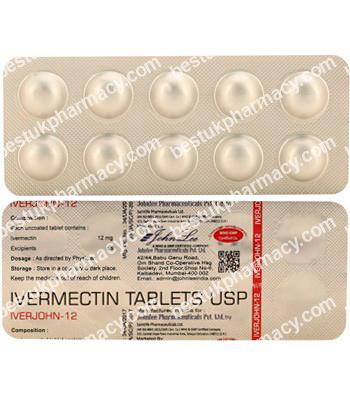
Ivermectin is a broad-spectrum antiparasitic agent belonging to the avermectin class. It is indicated for the treatment of strongyloidiasis (intestinal infection caused by Strongyloides stercoralis) and onchocerciasis (river blindness caused by Onchocerca volvulus). In the UK, it is also licensed for the treatment of scabies when prior topical therapy has failed or is contraindicated, and for the management of certain filarial infections. Ivermectin works by binding selectively and with high affinity to glutamate-gated chloride ion channels in invertebrate nerve and muscle cells, leading to hyperpolarisation of the cells, paralysis, and death of the parasite. It has no significant activity against adult Onchocerca volvulus but is microfilaricidal, reducing the number of microfilariae in the skin and eyes.
Usual adult dose: The dose is based on body weight. For strongyloidiasis: a single oral dose of 200 micrograms per kg of body weight. For a typical 60 to 75 kg adult, this corresponds to 12 mg to 15 mg, most commonly administered as a single dose of two 6 mg tablets (12 mg). For onchocerciasis: a single oral dose of 150 micrograms per kg of body weight, typically 12 mg for a 70 to 80 kg adult. For scabies (particularly crusted scabies or outbreak management): a single oral dose of 200 micrograms per kg, repeated once after 7 to 14 days. For filariasis, the dose is 150 to 200 micrograms per kg in combination with other agents such as albendazole. Ivermectin should be taken on an empty stomach with a full glass of water, at least 1 hour before or 2 hours after food, as food increases its bioavailability and may alter the dose-response relationship unpredictably.
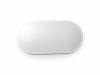
Dosage form: Tablets: 3 mg (white, round, uncoated, scored), 6 mg (white to off-white, round, uncoated, scored), and 12 mg (white to off-white, capsule-shaped, uncoated, scored). All strengths are typically scored to facilitate dose adjustment based on body weight. Tablets should be swallowed whole with water.
Onset of action: Following oral administration, peak plasma concentrations are reached within 3 to 5 hours. Microfilaricidal activity in onchocerciasis is rapid, with significant reductions in skin microfilariae counts observed within days of a single dose. Clinical improvement in symptoms of strongyloidiasis, including diarrhoea and abdominal pain, may be noted within the first few days. For scabies, reduction in pruritus typically begins within 24 to 48 hours, although complete symptom resolution may take several weeks as the host immune response to dead mites subsides.
Duration of action: The plasma elimination half-life of ivermectin is approximately 18 hours. However, its antiparasitic activity persists well beyond its pharmacokinetic half-life due to extensive tissue distribution, high protein binding, and a prolonged terminal elimination phase of approximately 3 days. A single dose is curative for strongyloidiasis. In onchocerciasis, treatment suppresses microfilaraemia for 6 to 12 months, and re-treatment at 6- to 12-month intervals is required to control symptoms and prevent disease progression. Retreatment intervals for mass drug administration programmes are typically 6 or 12 months.
Alcohol recommendation: Alcohol consumption should be avoided within 24 hours of taking ivermectin. Alcohol may increase the central nervous system penetration of ivermectin by increasing blood-brain barrier permeability, potentially leading to enhanced neurotoxicity. Additionally, alcohol can exacerbate the dizziness and somnolence occasionally associated with ivermectin therapy. Given that ivermectin is used as a single-dose treatment or intermittent therapy, a brief period of abstinence is generally feasible and advised.
Most common side effects: The safety profile of ivermectin varies depending on the condition being treated and the associated parasite burden. In strongyloidiasis, adverse effects are generally mild and include transient fatigue, dizziness, nausea, diarrhoea, and abdominal pain. In onchocerciasis, adverse effects are largely due to the host inflammatory response to dying microfilariae (Mazzotti reaction), and may include pruritus, urticarial rash, fever, headache, myalgia, arthralgia, lymphadenopathy, and peripheral oedema. Ocular side effects, including conjunctivitis and eyelid oedema, may occur. Severe Mazzotti reactions with postural hypotension and bronchospasm are rare but may require corticosteroid management. In patients with heavy Loa loa co-infection, ivermectin may precipitate a severe encephalopathy, and screening is essential before mass treatment in endemic regions.
Would you like to try Ivermectin without a prescription?


| Country | Shipping method | Delivery time | Price | |
|
|
 Delivery Delivery |
14-21 days | 14.95$ | Tracking# available in 4 days |
 Delivery Delivery |
9-14 days | 30$ | Tracking# available in 2 days |
At our pharmacy, you can buy Ivermectin without a prescription, with discreet and anonymous packaging delivered within 5-14 days across the UK.
Ivermectin is an antiparasitic drug. It was discovered in the late 1970s from a soil bacterium found on a Japanese golf course, and it went on to change the face of global health. It is the drug that has driven river blindness to the edge of elimination in multiple countries. In the UK, it is used for strongyloidiasis, scabies, and some ectoparasitic infestations. It is also the mainstay of treatment for onchocerciasis in endemic regions, though UK cases are imported. The drug paralyses and kills parasites by disrupting their nerve and muscle function. It does not kill bacteria. It does not kill viruses. The evidence for its use in COVID-19 was poor from the outset, and the large, well-conducted trials that followed confirmed it does not work for that indication.
The dose depends on the condition and body weight. For strongyloidiasis, a single dose of 200 micrograms per kilogram of body weight, repeated after 2 weeks if needed. For a 70 kg adult, that is roughly 15 mg, or five 3 mg tablets taken as a single dose. For scabies, the same weight-based dose is given, with a second dose 7 to 14 days later because the eggs survive the first round. For crusted scabies, multiple doses are needed, often combined with topical permethrin. The tablets come in 3 mg strengths. Higher strengths of 6 mg and 12 mg are available, which reduces the number of tablets for larger doses.
Ivermectin binds with high affinity to glutamate-gated chloride ion channels in invertebrate nerve and muscle cells. That binding opens the channels, chloride floods in, and the cell hyperpolarises. The parasite cannot maintain its membrane potential. Muscle paralysis and death follow. Mammals have glutamate-gated chloride channels too, but they are restricted to the central nervous system, and ivermectin does not cross the blood-brain barrier in significant amounts under normal circumstances. That selectivity is why the drug is safe in humans at therapeutic doses.
It also potentiates GABA-gated chloride channels in parasites, adding to the inhibitory effect. The combined action on both channel types makes it extraordinarily potent against nematodes and arthropods. The peak plasma concentration is reached about 4 hours after an oral dose. The drug is highly lipophilic, distributes widely into tissues, and has a long terminal half-life of roughly 18 hours. It is metabolised in the liver by CYP3A4, and both the parent drug and metabolites are excreted primarily in faeces, with less than 1% in urine.
Take it on an empty stomach with water. Food, particularly a fatty meal, increases absorption significantly. For systemic infections like strongyloidiasis, higher absorption is beneficial. For intestinal parasites where you want the drug to stay in the gut, the guidance varies. Follow the specific instructions for your condition. The standard recommendation for most indications is to take it without food to get consistent, predictable absorption.
The dose is weight-based. You need to know your weight in kilograms. If you are treating scabies at home and guessing the dose, you will either under-dose, which fails to clear the mites and breeds resistance, or over-dose, which increases side effects without improving efficacy. Weigh yourself. Calculate 200 micrograms per kilogram. One 3 mg tablet covers 15 kg of body weight. A 60 kg person needs 12 mg, or four 3 mg tablets. A 75 kg person needs 15 mg, or five 3 mg tablets. A 90 kg person needs 18 mg, or six 3 mg tablets. If the calculated dose falls between tablet strengths, round up to the nearest whole tablet.
If you forget a dose, take it as soon as you remember. If it is close to the time for the next scheduled dose, which is usually a week later for scabies, take the missed dose and adjust the timing of the next one accordingly. Do not take two doses close together to catch up.
In strongyloidiasis, the side effects are usually mild and transient. Nausea, diarrhoea, dizziness, and fatigue occur in less than 10% of patients. A transient rash can appear as the dying parasites trigger an immune response. This is not an allergy to the drug. It is a reaction to the antigens released by disintegrating worms.
In onchocerciasis, the side effects can be significant. The death of microfilariae in the skin and eye triggers an inflammatory response called the Mazzotti reaction. Fever, intense itching, rash, lymphadenopathy, and occasionally ocular inflammation develop within 24 to 48 hours of the first dose. The severity depends on the microfilarial load. This reaction is managed with antihistamines, corticosteroids, and supportive care. It is one of the reasons ivermectin for onchocerciasis is given under supervision in mass drug administration programmes, not handed out over the counter in endemic areas.
Neurotoxicity is exceptionally rare at standard doses but has been reported in patients with a high microfilarial burden of Loa loa, where the rapid killing of microfilariae in the brain can cause encephalopathy. This is not a concern in the UK unless the patient has recently travelled from West or Central Africa. Serious CNS effects, confusion, ataxia, seizures, are otherwise limited to overdose or to patients with a compromised blood-brain barrier, which is discussed below.
Pregnancy is a cautious zone. Ivermectin crosses the placenta. Animal studies at high doses showed teratogenicity, cleft palate in mice, but human data from mass drug administration programmes where pregnant women were inadvertently treated have not shown a clear increase in birth defects. The WHO now considers ivermectin acceptable in the second and third trimesters for certain indications. The manufacturer still advises against it unless the benefit outweighs the risk. In UK practice, treatment is usually deferred until after delivery unless the maternal illness is severe.
Breastfeeding is considered compatible with ivermectin by the WHO. The amount excreted in breast milk is low, less than 2% of the maternal dose, and adverse effects in nursing infants have not been reported. The benefits of treating a breastfeeding mother with scabies or strongyloidiasis generally outweigh the theoretical risk.
Children weighing less than 15 kg should not receive ivermectin. The blood-brain barrier is still maturing, and the drug's CNS penetration in this age group is higher. The safety data below 15 kg are insufficient. For scabies in a young infant, topical permethrin is the treatment of choice. For strongyloidiasis, specialist paediatric infectious disease input is needed.
Patients with a compromised blood-brain barrier, from meningitis, cerebral malignancy, or recent neurosurgery, are at risk of CNS toxicity from ivermectin. The drug can reach brain tissue at concentrations that disrupt GABAergic transmission. If you have a history of CNS disease, tell your doctor before taking it.
Older adults use the standard weight-based dose without adjustment. Renal impairment does not significantly alter ivermectin pharmacokinetics because the drug is hepatically cleared. In hepatic impairment, plasma levels can rise, and the half-life can lengthen. Dose reduction may be needed in severe liver disease, though precise guidelines are lacking.
Ivermectin can cause dizziness, drowsiness, and fatigue. If you experience these, do not drive until they resolve. For most people taking a single dose for scabies, the side effects are mild and short-lived. For someone on multiple doses for crusted scabies or strongyloidiasis, the risk of cumulative sedation is higher. Test your reaction to the first dose before getting behind the wheel.
Alcohol does not interact directly with ivermectin in a pharmacological sense. However, alcohol itself can cause dizziness, and the additive effect with ivermectin-induced sedation can be pronounced. If you are taking a single dose, avoiding alcohol for 24 hours is sensible. If you are on a multi-dose regimen, limit intake until you know how the drug affects you.
Ivermectin is a substrate of CYP3A4 and P-glycoprotein. Drugs that inhibit CYP3A4 can increase ivermectin levels. Ketoconazole, itraconazole, ritonavir, clarithromycin, and grapefruit juice all fall into this category. The clinical significance is modest for a single dose. For repeated doses, the accumulation could increase CNS side effects. If you are on a potent CYP3A4 inhibitor and need ivermectin, the dose interval may need extending.
Drugs that induce CYP3A4, rifampicin, carbamazepine, phenytoin, St. John's wort, can reduce ivermectin levels and potentially reduce efficacy. If you are on one of these, your doctor may need to adjust the ivermectin dose or monitor more closely for treatment failure.
Warfarin has a theoretical interaction. Ivermectin is highly protein-bound, and it could displace warfarin from albumin, transiently increasing the INR. Case reports of this interaction are scarce. Even so, an INR check a few days after ivermectin dosing is a reasonable precaution in a patient on warfarin.
Using ivermectin with other CNS depressants, benzodiazepines, opioids, gabapentinoids, increases the risk of sedation. This is additive, not synergistic. The practical implication is to avoid taking multiple sedating drugs at the same time. If you are on long-term opioids, the ivermectin dose itself does not change, but you should be aware that sedation may be more pronounced.
For scabies, topical permethrin 5% cream is first-line in the UK. It is applied to the whole body from the neck down, left on for 8 to 12 hours, and repeated after 7 days. It is effective when used correctly. The problem is compliance. It is messy, time-consuming, and people miss areas, between the fingers, under the nails, the genitals. Ivermectin is a tablet. Compliance is swallowing it. For outbreaks in care homes or prisons, oral ivermectin is logistically easier than topical treatment.
Malathion 0.5% aqueous lotion is an alternative topical for scabies when permethrin is not tolerated or has failed. It smells unpleasant and requires two applications. Benzyl benzoate is used in some countries but is irritant and not first-line in the UK.
For strongyloidiasis, ivermectin is first-line. Albendazole is an alternative but is less effective. For chronic strongyloidiasis, particularly in immunocompromised patients, a longer course of ivermectin may be needed, sometimes combined with albendazole under specialist supervision. Hyperinfection syndrome is a medical emergency with high mortality, and ivermectin is the cornerstone of treatment, often given by nasogastric tube or rectally if the oral route is not possible.
For onchocerciasis, ivermectin is the only drug used in mass drug administration programmes. It kills microfilariae but not adult worms, so treatment must be repeated annually for the lifespan of the adult worm, 10 to 15 years. Doxycycline, which targets the Wolbachia endosymbiont of the adult worm, can sterilise and eventually kill adult worms when given for 4 to 6 weeks. It is used in some clinical settings but is not practical for mass treatment.
For scabies in particular, environmental measures matter alongside drug treatment. Wash bedding, towels, and clothing worn in the last 3 days at 60 degrees Celsius or higher. Items that cannot be washed should be sealed in a plastic bag for at least 72 hours. The mites die without human contact within 2 to 3 days. Treat all household members and close contacts simultaneously, even if they are asymptomatic. Itching can persist for weeks after successful treatment. This is a hypersensitivity reaction to the dead mites, not a sign of treatment failure.
INN (International Nonproprietary Name): Ivermectin
Available brand names in the UK: Stromectol, and generic ivermectin products
ATC code: P02CF01 (systemic), D11AX22 (topical)
Forms and strengths: Tablets: 3 mg, 6 mg, 12 mg; Topical cream: 1% (for rosacea, not scabies)
Manufacturers: Merck Sharp and Dohme (Stromectol), and diverse generic manufacturers including Teva, Accord, Zentiva
Registration status in the UK: Registered as a Prescription Only Medicine (POM). Ivermectin is typically prescribed in primary care for scabies and strongyloidiasis. It is not available over the counter.
Classification: Prescription Only Medicine (POM)
The 3 mg tablet is the standard for dose titration because it allows precise weight-based dosing. For a patient who needs 12 mg, four 3 mg tablets work. For a patient who needs 15 mg, five 3 mg tablets work. The 6 mg and 12 mg tablets reduce the pill burden for higher doses. A 90 kg patient needing 18 mg could take six 3 mg tablets, three 6 mg tablets, or one 12 mg tablet plus two 3 mg tablets. The efficacy is the same. The choice is about convenience and the practicalities of what the pharmacy has in stock.
Generic ivermectin and branded Stromectol are bioequivalent. The supply of ivermectin in UK community pharmacies has been disrupted at times due to demand surges driven by misinformation. If you have a legitimate prescription for scabies or strongyloidiasis, confirm with your pharmacy that the stock is available. Delaying treatment for strongyloidiasis in an immunocompromised patient can have serious consequences.
The topical 1% cream is a different product for a different condition. It is licensed for the inflammatory lesions of rosacea, not for scabies. It works by an anti-inflammatory mechanism that is not fully understood, possibly involving the killing of Demodex mites that contribute to rosacea. Do not use the topical cream for scabies. It is not formulated for that purpose and will not work reliably.
How quickly does ivermectin work for scabies?
The drug kills the mites within 24 to 48 hours. The itching does not stop that quickly. It can persist for 2 to 4 weeks as the skin sheds the dead mites and their debris. This is a hypersensitivity reaction, not treatment failure. Antihistamines and topical corticosteroids help with the itch. A second dose at 7 to 14 days ensures any mites that hatched from surviving eggs are killed.
Can I use ivermectin for head lice?
Oral ivermectin is effective for head lice, but it is not the standard UK approach. Topical dimeticone or wet combing are first-line. Ivermectin is considered when topical treatments have failed repeatedly. A single dose of 200 micrograms per kilogram, repeated at 7 to 10 days, clears lice in most cases. It is an off-label use in the UK, so the decision should involve a GP or dermatologist.
Is ivermectin safe to take every day for prevention?
No. There is no approved indication for daily prophylactic ivermectin. Chronic use risks neurotoxicity and hepatotoxicity. The long half-life means the drug accumulates. The evidence for prophylactic use against any condition, including COVID-19, does not support it. The doses used in mass drug administration for onchocerciasis are once annually, not daily. Taking ivermectin daily without a clear diagnosis and a defined treatment course is not safe.
What is the Mazzotti reaction?
It is an inflammatory response to dying microfilariae in onchocerciasis. Fever, itching, rash, lymph node swelling, and sometimes eye inflammation. It peaks 24 to 48 hours after the first dose. The severity reflects the parasite load. It is managed with antihistamines, paracetamol, and in severe cases, corticosteroids. It is not an allergy to ivermectin. It confirms that the drug is working and microfilariae are dying in large numbers.
Can ivermectin treat COVID-19?
Multiple large randomised controlled trials, including the UK PRINCIPLE trial, have shown no benefit of ivermectin in COVID-19. The initial signals of benefit came from small, poorly conducted studies, several of which have been retracted. The current consensus from NICE, the WHO, and the MHRA is that ivermectin should not be used for COVID-19 outside a clinical trial. Using it for this purpose diverts supply from patients with genuine parasitic infections for which the drug is proven and sometimes life-saving.
We ship Ivermectin to all parts of the United Kingdom. Delivery times depend on your location:
All shipments are packed discreetly with no branding or indication of contents on the outside. At our pharmacy, you can purchase Ivermectin without a prescription, with delivery across the UK.


