Menu


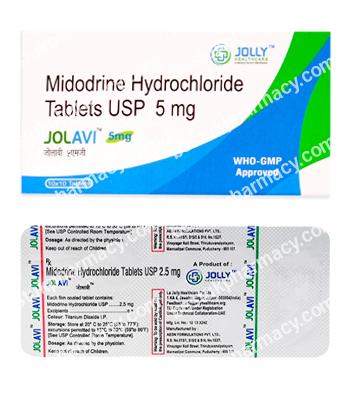
Midodrine hydrochloride is a peripherally acting alpha-1 adrenergic agonist indicated for the treatment of severe orthostatic hypotension due to autonomic dysfunction when corrective factors have been ruled out and other forms of treatment are inadequate. It works through its active metabolite, desglymidodrine, which stimulates alpha-1 adrenergic receptors on arteriolar and venous vasculature, increasing peripheral vascular resistance and venous return. This vasoconstrictor action leads to an elevation in both supine and standing blood pressure, thereby alleviating symptoms of orthostatic hypotension such as dizziness, light-headedness, and syncope. Midodrine does not cross the blood-brain barrier to a significant extent and is therefore not associated with central nervous system stimulant effects.
Usual adult dose: The recommended starting dose is 2.5 mg taken two to three times daily. Based on clinical response and tolerability, the dose may be increased at weekly intervals up to a maximum of 10 mg three times daily. Doses should be taken during daytime hours when the patient is upright, with the last dose administered at least 4 hours before bedtime to minimise the risk of supine hypertension. A typical maintenance regimen is 5 mg to 10 mg three times daily, with doses administered shortly before arising, at midday, and in the late afternoon. The patient must be carefully monitored for supine hypertension, which is the most serious risk associated with midodrine therapy, and blood pressure should be assessed in both supine and standing positions regularly throughout treatment.
Dosage form: Tablets: 2.5 mg (white to off-white, round, scored on one side). The 2.5 mg tablets can be broken in half to provide a 1.25 mg dose if a lower starting dose is clinically indicated. Tablets should be swallowed whole with a glass of water and may be taken with or without food.
Onset of action: Midodrine is a prodrug, and peak plasma concentrations of the active metabolite desglymidodrine are reached approximately 1 to 2 hours after oral administration. Increases in standing systolic blood pressure are typically observed within 30 to 45 minutes of dosing, with peak pressor effect occurring at approximately 1 to 2 hours post-dose, corresponding with peak metabolite levels.
Duration of action: The haemodynamic effect of a single dose lasts approximately 3 to 4 hours, which corresponds to the elimination half-life of desglymidodrine of approximately 3 to 4 hours. This duration of action supports two to three times daily dosing. Doses should be timed to coincide with periods when the patient is most likely to be upright and active, and the last dose should not be taken after the late afternoon to prevent nocturnal supine hypertension.
Alcohol recommendation: Alcohol consumption should be avoided during treatment with midodrine hydrochloride. Alcohol is a potent vasodilator and can counteract the therapeutic vasoconstrictor effect of midodrine, worsening orthostatic hypotension and reducing the clinical benefit of the medication. Additionally, alcohol may impair the patient's ability to recognise the symptoms of supine hypertension and may exacerbate dizziness and instability, increasing the risk of falls. Patients with autonomic dysfunction are particularly sensitive to the hypotensive effects of alcohol.
Most common side effects: Supine hypertension is the most serious and common adverse effect, occurring in approximately 25% of patients; this is dose-dependent and requires careful monitoring and appropriate dose timing. Paraesthesia, including scalp pruritus and tingling, is a very frequent dose-related effect caused by piloerection and is generally mild and self-limiting. Piloerection (goosebumps), chills, and urinary retention or urinary urgency are also commonly reported. Other common side effects include bradycardia, gastrointestinal discomfort including nausea and dyspepsia, and headache. Rash has been reported uncommonly.
Would you like to try Midodrine (Midodrine Hydrochloride) without a prescription?



| Country | Shipping method | Delivery time | Price | |
|
|
 Delivery Delivery |
14-21 days | 14.95$ | Tracking# available in 4 days |
 Delivery Delivery |
9-14 days | 30$ | Tracking# available in 2 days |
At our pharmacy, you can buy Midodrine without a prescription, with discreet and anonymous packaging delivered within 5-14 days across the UK.
Midodrine is a vasopressor used to treat orthostatic hypotension, a condition where blood pressure drops sharply when you stand up. It works by constricting peripheral blood vessels, which pushes blood back toward the heart and brain instead of pooling in the legs. It is not a first-line treatment for everyone with dizziness on standing. It is used when simple measures, compression stockings, increased salt and fluid intake, fludrocortisone, have not been enough. For someone whose blood pressure drops from 120/80 lying down to 80/50 standing up, midodrine can mean the difference between walking to the kitchen and being stuck in a chair.
The standard dose is 2.5 mg taken two to three times daily. Some patients need 5 mg or even 10 mg per dose depending on response and tolerability. The key is timing. Take it during the day when you are upright and active. Do not take it within 4 hours of bedtime. Lying down with midodrine in your system raises supine blood pressure, sometimes to dangerous levels, which increases the risk of stroke. The last dose of the day should be in the late afternoon, early enough that the effect wears off before you go to bed.
Midodrine is a prodrug. It is converted in the body to its active metabolite, desglymidodrine, which is a selective alpha-1 adrenergic receptor agonist. Alpha-1 receptors sit on vascular smooth muscle. Activate them, and the muscle contracts, the vessel narrows, and peripheral resistance rises. That increases venous return and cardiac output, which raises blood pressure. It does this without crossing the blood-brain barrier in significant amounts. That matters because centrally acting alpha-1 agonists cause sedation and rebound hypertension through mechanisms midodrine largely avoids.
The onset of action is about 30 to 60 minutes after an oral dose. Peak effect occurs around 1 to 2 hours, and the duration is roughly 4 to 6 hours, which is why three-times-daily dosing is typical. The drug and its metabolite are excreted renally. In renal impairment, the half-life lengthens, and the dose may need to be reduced or the interval extended. Midodrine is not metabolised through CYP450 enzymes, so drug interactions are mostly pharmacodynamic rather than pharmacokinetic, which keeps the interaction list shorter than many cardiovascular drugs.
Take it during daytime hours only. The first dose goes in the morning, before you get out of bed if the orthostatic drop is severe. Some patients keep the tablets and a glass of water on the bedside table, take the dose, and wait 30 minutes before standing. The second dose is mid-morning or early afternoon. The third dose, if needed, is late afternoon. After 6 pm is risky unless you are certain you will not be lying down for several hours.
If you forget a dose, take it as soon as you remember. If it is close to the time for your next dose, skip the missed one. Do not double up. If you miss the afternoon dose and it is already evening, skip it. The risk of supine hypertension from a late dose outweighs the benefit of catching up.
Blood pressure monitoring is part of using this drug safely. You need to know your lying, sitting, and standing pressures at baseline and during treatment. The goal is not to normalise standing pressure. It is to raise it enough that you can function without fainting, while keeping supine pressure below 180/110 mmHg. This is a narrow therapeutic window, and it requires active management. If your lying pressure is consistently above 180/110, the dose or timing needs adjustment.
Supine hypertension is the most serious. It affects roughly 25% of patients at some point during treatment. The risk climbs with dose and with evening dosing. The rule is simple: do not lie flat within 4 hours of taking a dose. If you need a nap during the day, do it in a reclining chair with the head elevated, not flat on a bed. If supine hypertension develops, the dose is reduced, the interval between the last dose and bedtime is extended, or a short-acting antihypertensive taken at night can be considered under specialist supervision.
Piloerection, goosebumps, and scalp tingling are the most distinctive side effects. They are not dangerous but they feel strange. They happen because alpha-1 receptors in the skin are being stimulated. The sensation is often described as a crawling or itching on the scalp. It peaks with each dose and fades over a few hours. It does not mean the drug is harming you. It means it is working.
Urinary retention can occur because alpha-1 stimulation at the bladder neck increases sphincter tone. Men with prostatic enlargement are more susceptible. If you find it difficult to pass urine or feel like your bladder is not emptying fully, tell your doctor. The dose may need to be reduced or an alternative treatment considered. Chills, headache, and gastrointestinal upset, nausea, heartburn, occur in a minority of patients, usually early in treatment. Pruritus and rash have been reported.
Severe organic heart disease is a contraindication. Midodrine increases peripheral resistance, which increases the workload on the heart. In someone with severe coronary artery disease, heart failure, or significant valvular disease, that extra load can trigger angina, arrhythmia, or decompensation. A thorough cardiac history and examination are needed before starting.
Acute renal failure, urinary retention from any cause, and phaeochromocytoma are contraindications. Phaeochromocytoma is a catecholamine-secreting tumour that already raises blood pressure. Adding an alpha-1 agonist on top of that is dangerous. Thyrotoxicosis is also listed as a contraindication because of the hyperdynamic circulation and increased cardiac sensitivity.
Pregnancy has no adequate human data. Midodrine is not recommended unless the maternal benefit is judged to outweigh the foetal risk. Orthostatic hypotension in pregnancy is usually managed with non-pharmacological measures first because the condition is often self-limiting postpartum. If a pregnant woman genuinely needs a vasopressor, management should involve both obstetrics and a physician experienced in autonomic disorders.
Older adults are the population most likely to need midodrine and the population most at risk from its side effects. They have less baroreflex reserve, more comorbidities, and a higher baseline risk of stroke from supine hypertension. Doses should start at 2.5 mg twice daily, and supine pressure must be monitored carefully. The patient needs to understand the timing rules. An older person who takes a dose and then lies down for an afternoon nap because they forgot the instructions is at real risk.
Midodrine itself does not impair alertness. The condition it treats, orthostatic hypotension, can cause presyncope or syncope while standing, which makes driving unsafe if it is not controlled. Do not drive if you are still having episodes of dizziness or visual disturbance. Once your blood pressure is stabilised and you can stand and walk without symptoms, driving is generally safe. The DVLA does not specifically restrict driving for midodrine use, but the underlying condition must be adequately treated.
Alcohol causes vasodilation and can worsen orthostatic hypotension. It works against what midodrine is trying to achieve. A small amount of alcohol with a meal is unlikely to cause problems for most patients. Larger amounts, particularly on an empty stomach, can drop your blood pressure enough to trigger symptoms. If you are going to drink, do it in the evening after the last dose of midodrine has worn off, and be careful standing up.
The interaction list is pharmacodynamic, not pharmacokinetic. Drugs that raise blood pressure can amplify midodrine's pressor effect. Sympathomimetics in cold and flu remedies, pseudoephedrine and phenylephrine, can push supine pressure too high. Decongestant use should be short-term and monitored. If you already have borderline supine hypertension on midodrine, adding pseudoephedrine for a cold can tip you into the danger zone.
Alpha-1 blockers, doxazosin, tamsulosin, alfuzosin, directly antagonise midodrine at the receptor. Using them together makes both less effective. A man on tamsulosin for benign prostatic hyperplasia who starts midodrine for orthostatic hypotension will get a reduced pressor response. Sometimes the tamsulosin needs to be stopped or switched. This is a conversation between the urologist and the physician managing the hypotension.
Beta-blockers have a complex interaction. They can leave alpha-mediated vasoconstriction unopposed, which theoretically increases the pressor effect of midodrine. In practice, the interaction is manageable with blood pressure monitoring. Tricyclic antidepressants and MAO inhibitors can also potentiate the pressor response because they interfere with noradrenaline reuptake. These combinations are not contraindicated, but they require awareness and monitoring.
Fludrocortisone and midodrine are often used together for severe orthostatic hypotension. Fludrocortisone expands plasma volume. Midodrine increases vascular tone. They address different parts of the problem. The combination increases the risk of supine hypertension and hypokalaemia, so monitoring includes electrolytes and lying blood pressure. This is standard practice in autonomic units, not a reason to avoid the combination.
Fludrocortisone is the other main pharmacological option for orthostatic hypotension. It is a mineralocorticoid that increases sodium and water retention, expanding blood volume. It takes days to weeks to work and carries risks of hypokalaemia, oedema, and supine hypertension. For a young patient with autonomic failure, fludrocortisone is often tried first. For an older patient with heart failure or significant oedema, midodrine may be preferred because it avoids the volume expansion.
Droxidopa is a synthetic noradrenaline precursor approved for neurogenic orthostatic hypotension. It crosses the blood-brain barrier and is converted to noradrenaline centrally and peripherally. It is more expensive and less widely used in the UK than midodrine, but it is an option for patients who do not respond to or cannot tolerate midodrine and fludrocortisone.
Non-pharmacological measures come first. Compression stockings up to the waist, not just knee-high, are effective but uncomfortable and difficult to put on. Abdominal binders work by reducing splanchnic venous pooling. Salt and fluid intake should be increased, 6 to 10 g of sodium per day and 2 to 3 litres of water, unless there is a contraindication like heart failure or uncontrolled hypertension. Sleeping with the head of the bed elevated reduces nocturnal pressure diuresis and helps maintain morning blood pressure. Physical counter-manoeuvres, crossing legs, tensing gluteal muscles, squatting, can abort an impending faint.
Treating the underlying cause matters. Orthostatic hypotension in diabetes may improve with better glycaemic control and management of cardiovascular risk factors. In Parkinson's disease or multiple system atrophy, midodrine treats a symptom of a disease that continues to progress. In drug-induced orthostatic hypotension, the first step is to review and adjust the offending medications, antihypertensives, diuretics, dopaminergic drugs, before adding another drug to treat the side effect.
INN (International Nonproprietary Name): Midodrine hydrochloride
Available brand names in the UK: Bramox, Gutron (discontinued in UK but available in other markets), and generic midodrine products
ATC code: C01CA17
Forms and strengths: Tablets: 2.5 mg, 5 mg, 10 mg
Manufacturers: Brancaster Pharma (Bramox), Takeda (Gutron), and diverse generic manufacturers
Registration status in the UK: Registered as a Prescription Only Medicine (POM). Midodrine is typically initiated by a specialist in cardiology, neurology, or autonomic medicine rather than in primary care.
Classification: Prescription Only Medicine (POM)
The 2.5 mg tablet is the starting point. It is enough for some patients, particularly those who are small, elderly, or sensitive to vasopressors. The 5 mg tablet is the most common maintenance dose per administration. The 10 mg tablet is for patients who have demonstrated a need for higher doses and tolerate them well. Starting at 10 mg is not advisable because the initial response is unpredictable.
Tablets can be split if the score line permits. A patient who needs 7.5 mg three times daily might split a 5 mg tablet and take one and a half tablets per dose. This kind of fine-tuning is common in autonomic clinics because the dose-response curve varies widely between individuals.
Generic midodrine and branded Bramox are bioequivalent. The supply of midodrine in UK community pharmacies can be inconsistent because it is not a commonly stocked drug. If you are starting treatment, confirm with the pharmacy that a reliable supply is available. Running out of midodrine is not like running out of a vitamin. A patient with severe autonomic failure can decompensate quickly without it.
Why can't I take midodrine before bed?
Because lying flat with midodrine in your system raises supine blood pressure. In a patient whose standing pressure is 80/50 without treatment, the lying pressure may already be normal or elevated. Midodrine can push it above 200/100, which is stroke territory. The drug's pressor effect lasts 4 to 6 hours. Taking the last dose at least 4 hours before lying down, and checking supine pressure periodically, is how you manage that risk.
What does the scalp tingling mean?
It is a side effect of alpha-1 stimulation in the skin. It is not a sign of allergy or toxicity. It is uncomfortable but harmless. It tends to peak with each dose and lessen over time, though some patients have it throughout treatment. It is, in a way, a sign the drug is active. If it is severe, reducing the dose may help.
Can I use midodrine for occasional dizziness?
Midodrine is for diagnosed orthostatic hypotension, not for the occasional dizzy spell from dehydration or standing up too quickly on a hot day. The diagnosis requires documented drops in blood pressure on standing, ideally with tilt-table testing or active stand testing. Using a vasopressor without a clear diagnosis risks causing supine hypertension for a problem that may have a simpler solution.
What happens if I take too much?
Overdose causes severe hypertension, reflex bradycardia, piloerection, and urinary retention. The hypertension can be severe enough to cause a hypertensive emergency with end-organ damage. Treatment is supportive, with head elevation and short-acting antihypertensives if needed. If you suspect you have taken too much, seek urgent medical attention. Do not lie flat. Keep your head elevated and get to A&E.
Can midodrine be used long term?
Yes. Many patients with chronic autonomic failure take it for years. There is no evidence of tachyphylaxis or loss of effect over time. Renal function and supine blood pressure should be monitored periodically. The progression of the underlying disease may change the dose requirement. In progressive conditions like multiple system atrophy, the dose may need to increase over time as the autonomic failure worsens.
We ship Midodrine to all parts of the United Kingdom. Delivery times depend on your location:
All shipments are packed discreetly with no branding or indication of contents on the outside. At our pharmacy, you can purchase Midodrine without a prescription, with delivery across the UK.


