Menu


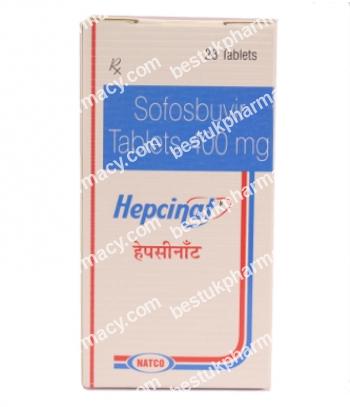
Sovaldi (sofosbuvir) is a direct-acting antiviral agent indicated for the treatment of chronic hepatitis C virus (HCV) infection in adults and children aged 3 years and older, as part of a combination antiviral treatment regimen. It is a nucleotide analogue NS5B polymerase inhibitor that targets the HCV RNA-dependent RNA polymerase, causing chain termination and inhibiting viral replication. Sovaldi has potent pangenotypic activity against HCV genotypes 1, 2, 3, 4, 5, and 6. It must always be used in combination with other medicinal products for the treatment of chronic HCV, most commonly ribavirin with or without peginterferon alfa, or in combination with another direct-acting antiviral agent such as ledipasvir or velpatasvir. Sovaldi monotherapy is not effective and must not be used alone.
Usual adult dose: The recommended dose is one 400 mg tablet taken orally once daily. The tablet should be taken with or without food. The specific treatment regimen and duration are determined by HCV genotype, prior treatment history, and the presence or absence of cirrhosis. Typical treatment durations are 12 weeks for most genotypes, extended to 24 weeks for certain patient populations, including those with genotype 3 infection and compensated cirrhosis, or in treatment-experienced patients. Dosing regimens incorporating ribavirin require ribavirin to be administered in divided doses with food, and dose adjustments to ribavirin may be necessary based on haemoglobin levels and renal function. No dose adjustment of Sovaldi is required for hepatic impairment or mild to moderate renal impairment. The safety of Sovaldi has not been assessed in patients with severe renal impairment (eGFR below 30 mL/min/1.73 m²) or end-stage renal disease requiring haemodialysis.
Dosage form: Film-coated tablets: 400 mg (yellow, capsule-shaped, debossed with "GSI" on one side and "7977" on the other). Available in bottles of 28 tablets, representing a 4-week supply.
Onset of action: Rapid and substantial decline in plasma HCV RNA levels is observed within days of initiating therapy. Maximal plasma concentration of sofosbuvir is reached approximately 0.5 to 1 hour post-dose, while the predominant circulating metabolite, GS-331007, reaches peak concentration at 3 to 4 hours post-dose. Undetectable HCV RNA is the goal of therapy, and sustained virological response is assessed 12 weeks after completion of treatment.
Duration of action: Sofosbuvir undergoes extensive intracellular phosphorylation to the active triphosphate form, which has a prolonged intracellular half-life of approximately 27 hours in hepatocytes, enabling potent antiviral suppression with once-daily dosing. The terminal plasma half-life of the inactive metabolite GS-331007 is approximately 13 to 15 hours. After completion of a 12-week treatment course, the drug is fully eliminated from plasma within a few days.
Alcohol recommendation: Alcohol consumption should be avoided during treatment with Sovaldi. Alcohol can accelerate the progression of liver disease, exacerbate hepatic inflammation and fibrosis, and reduce the likelihood of achieving a sustained virological response. Patients with chronic HCV infection are strongly advised to abstain from alcohol entirely, both during antiviral therapy and in the long term, to preserve hepatic function and prevent disease progression to cirrhosis and hepatocellular carcinoma.
Most common side effects: The safety profile of Sovaldi is dependent on the co-administered agents. When used with ribavirin with or without peginterferon alfa, the most common side effects include fatigue, headache, nausea, insomnia, anaemia, and pruritus. Rash, decreased appetite, diarrhoea, and influenza-like illness are also commonly reported. When used in interferon-free, ribavirin-free regimens, Sovaldi is generally very well tolerated, with headache and fatigue being the most frequently observed adverse events. Significant bradycardia has been reported when sofosbuvir-containing regimens are co-administered with amiodarone, and this combination is contraindicated unless no alternative antiarrhythmic treatment is available.
Would you like to try Sovaldi (Sofosbuvir) without a prescription?



| Country | Shipping method | Delivery time | Price | |
|
|
 Delivery Delivery |
14-21 days | 14.95$ | Tracking# available in 4 days |
 Delivery Delivery |
9-14 days | 30$ | Tracking# available in 2 days |
At our pharmacy, you can buy Sovaldi without a prescription, with discreet and anonymous packaging delivered within 5-14 days across the UK.
Sovaldi is an antiviral drug used to treat chronic hepatitis C. Its active ingredient, sofosbuvir, was a breakthrough when it arrived because it made hepatitis C curable in a way that previous treatments simply could not match. The older regimen of pegylated interferon and ribavirin took a year, caused brutal side effects, and failed half the time. Sovaldi, in combination with other antivirals, clears the virus in 8 to 12 weeks for most people. Cure rates exceed 90% across all genotypes in clinical trials and real-world data.
The standard dose is one 400 mg tablet taken once daily. It is never used alone. It is always combined with another hepatitis C antiviral, most commonly velpatasvir, ledipasvir, or voxilaprevir, and sometimes with ribavirin depending on the genotype, prior treatment history, and presence of cirrhosis. The combination covers all six major genotypes of hepatitis C. The choice of partner drug and duration is determined by a specialist based on genotype, viral load, liver fibrosis stage, and whether the patient has been treated before.
Sofosbuvir is a nucleotide analogue NS5B polymerase inhibitor. It is a prodrug that gets converted inside hepatocytes to its active triphosphate form, which then competes with uridine triphosphate for incorporation into the growing viral RNA chain. When the polymerase tries to add it, the chain terminates. The virus cannot replicate. That is a simplification, but the core idea is solid: it stops the enzyme the virus uses to copy its genome.
What made sofosbuvir a genuine advance was its potency, its high barrier to resistance, and its clean safety profile compared to interferon. NS5B is a highly conserved region of the hepatitis C genome. Resistance-associated substitutions do occur, but they are rare and tend to be less fit than the wild-type virus. The drug is active against all genotypes. It is not metabolised by CYP450 enzymes, which keeps drug interactions manageable compared to the protease inhibitors that came before it. Renal excretion is the main elimination route. About 80% of the drug leaves the body as the inactive metabolite GS-331007 in urine. In patients with severe renal impairment, GS-331007 accumulates, and the safety data in that population are thin. Dosing in end-stage renal disease has been a subject of ongoing study rather than settled guidance.
Take one 400 mg tablet once daily with or without food. The absorption is not significantly affected by meals. Take it at roughly the same time each day. Consistency keeps the drug level steady, which minimises the chance of the virus finding a window to replicate.
If you forget a dose and it is within 18 hours of the time you normally take it, take it as soon as you remember. If it is more than 18 hours later, skip the missed dose and take the next one at the usual time. Do not double the dose. Missing doses repeatedly is how treatment fails. Hepatitis C antivirals work by sustained pressure on the virus. Gaps in that pressure give resistant strains room to emerge. The cure rate drops if adherence is poor.
You will be taking at least one other antiviral with sofosbuvir. The partner drug has its own dosing instructions. Ribavirin, when included, is taken twice daily with food, and food significantly increases its absorption. Read the information for each component. The regimen works as a package, not as individual drugs that can be adjusted independently.
Sofosbuvir itself is remarkably well tolerated. The side effects reported in trials are largely driven by the companion drugs, particularly ribavirin. When sofosbuvir is combined with velpatasvir or ledipasvir without ribavirin, the most common complaints are headache and fatigue, occurring in roughly 10% to 20% of patients, and they tend to be mild.
Ribavirin changes the picture. It causes haemolytic anaemia, which shows up as fatigue, shortness of breath, and pallor. Haemoglobin drops by an average of 2 to 3 g/dL. This needs monitoring and sometimes dose reduction. It also causes rash, cough, and irritability. Ribavirin is teratogenic, so pregnancy must be avoided during treatment and for several months after it ends, for both female patients and female partners of male patients.
Serious side effects are uncommon. Bradycardia has been reported when sofosbuvir is used with amiodarone, which is why that combination is now contraindicated. Liver decompensation can occur in patients with advanced cirrhosis who are started on a protease-inhibitor-containing regimen, though this is less about sofosbuvir and more about the specific combination chosen. Nausea, diarrhoea, and insomnia show up in a minority of patients and are usually manageable without stopping treatment.
Patients with decompensated cirrhosis, ascites, variceal bleeding, encephalopathy, need careful assessment. Sofosbuvir combined with velpatasvir can be used in decompensated cirrhosis, but ribavirin is added, and the patient must be managed by a hepatologist with experience in end-stage liver disease. Treating hepatitis C at this stage can stabilise liver function and sometimes move someone off the transplant list. It can also trigger decompensation if the wrong regimen is chosen.
Renal impairment matters because sofosbuvir's metabolite accumulates. For patients with an eGFR above 30 mL/min, standard dosing is safe. For those with eGFR below 30 mL/min or on haemodialysis, the evidence base is less robust. Some regimens are now licensed for use in severe renal impairment, but the decision requires specialist input and careful monitoring.
Pregnancy is a contraindication only because of the companion drugs, particularly ribavirin. Sofosbuvir itself has not shown evidence of teratogenicity in animal studies, but the data in human pregnancy are virtually nonexistent. Hepatitis C treatment is almost always deferred until after delivery unless the clinical situation is urgent. If pregnancy occurs during treatment, the ribavirin component is stopped immediately. Sofosbuvir may or may not be continued depending on the regimen and the clinical context.
Co-infection with hepatitis B is a specific concern. Treating hepatitis C in someone with hepatitis B can trigger HBV reactivation. Hepatitis B surface antigen and core antibody should be checked before starting sofosbuvir-based therapy. If HBV infection is present, the patient may need HBV treatment or close monitoring during and after hepatitis C treatment. Cases of severe hepatitis from HBV reactivation have been fatal. This is screened for, but it is a reminder that hepatitis C does not exist in isolation in many patients.
HIV co-infection does not alter sofosbuvir dosing. The cure rates are the same as in HIV-negative patients. Drug interactions with antiretrovirals need checking, but sofosbuvir has few clinically significant ones. The bigger issue is making sure the antiretroviral regimen is fully suppressive before hepatitis C treatment starts, and that no component of the antiretroviral regimen conflicts with the companion drug.
Sofosbuvir does not impair alertness. Driving is fine unless fatigue from the treatment or the underlying liver disease makes it unsafe. Ribavirin-induced anaemia can cause significant fatigue, and if your haemoglobin has dropped, driving long distances is a judgement call.
Alcohol is a more direct issue. Hepatitis C accelerates liver fibrosis, and alcohol accelerates it further. The two together are synergistic in the worst way. Drinking during treatment undermines the point of curing the virus. If you have hepatitis C and continue to drink heavily, you are pouring fuel on a smouldering fire. The liver that is being treated is already damaged. Alcohol adds insult, literally. Abstinence is strongly advised. If you cannot stop, be honest with your hepatology team. They can direct you to support services. Curing hepatitis C and continuing to drink heavily trades one cause of cirrhosis for another.
Sofosbuvir itself has a clean interaction profile because it is not a CYP450 substrate, inhibitor, or inducer. The interactions come from the companion drugs. Ledipasvir and velpatasvir are substrates and inhibitors of P-glycoprotein and various transporter proteins. This is where the complexity sits.
Amiodarone combined with sofosbuvir and another DAA can cause severe bradycardia and heart block. This is now a contraindication in the prescribing information. If you are on amiodarone and need hepatitis C treatment, the cardiology and hepatology teams need to coordinate closely. Alternatives to amiodarone should be explored first. If there is no alternative, inpatient cardiac monitoring during the first 48 hours of treatment has been used, but it is a high-risk situation.
Acid-reducing drugs, proton pump inhibitors like omeprazole and lansoprazole, reduce the absorption of ledipasvir and velpatasvir by raising gastric pH. The solubility of these drugs is pH-dependent. If you are on ledipasvir, PPIs should be taken at least 4 hours after the sofosbuvir-ledipasvir dose, and the PPI dose should be equivalent to omeprazole 20 mg or less. Velpatasvir has similar sensitivity. H2 antagonists like famotidine are also restricted. Antacids need to be separated by 4 hours. This is not a minor detail. Ignoring it can cut drug exposure enough to reduce cure rates.
Rifampicin, rifabutin, St. John's wort, and other potent P-glycoprotein inducers reduce sofosbuvir and companion drug levels significantly. They are contraindicated. Carbamazepine, phenytoin, and phenobarbital fall into the same category. If a patient is on one of these for epilepsy, the neurologist and hepatologist need to find an alternative anticonvulsant before hepatitis C treatment starts.
Certain antiretrovirals interact with companion drugs. Tenofovir levels increase when co-administered with ledipasvir, which raises the risk of renal toxicity. Renal function should be monitored more closely. Efavirenz reduces velpatasvir levels. These interactions are manageable with dose adjustments or switches within the antiretroviral regimen, but they require a pharmacist or HIV specialist to review the full medication list.
Sofosbuvir is one component in a class of drugs called direct-acting antivirals. The alternatives are not really alternatives to sofosbuvir; they are different combinations built around different backbones.
Glecaprevir-pibrentasvir (Mavyret) is a ribavirin-free, 8-week regimen for most patients without cirrhosis. It covers all genotypes and has a low interaction burden. It is a protease inhibitor plus an NS5A inhibitor, so the backbone is different from sofosbuvir. It is a strong option, particularly for genotype 3, where some sofosbuvir-based regimens need ribavirin and 12 to 16 weeks of treatment.
Elbasvir-grazoprevir (Zepatier) is another ribavirin-free option for genotypes 1 and 4. It has the advantage of being safe in severe renal impairment, including haemodialysis, which makes it one of the go-to regimens for that population. Resistance testing for NS5A polymorphisms is required before starting for certain genotypes.
For patients who have failed a previous DAA regimen, sofosbuvir-velpatasvir-voxilaprevir (Vosevi) is a triple-combination rescue therapy. It covers resistant virus that emerged during the first treatment attempt. It is given for 12 weeks and cures most people who were not cured the first time.
The older regimens, peginterferon with ribavirin, with or without a first-generation protease inhibitor like boceprevir or telaprevir, are now obsolete in UK practice. They are less effective, more toxic, and take longer. They belong to the history of hepatitis C treatment, not its present.
For decompensated cirrhosis where antivirals are too risky or have failed, liver transplantation becomes the remaining option. Curing hepatitis C has reduced the demand for transplant for HCV-related liver disease, which is one of the public health achievements of the DAA era. But transplantation is still needed for those who present too late or develop hepatocellular carcinoma despite viral clearance.
INN (International Nonproprietary Name): Sofosbuvir
Available brand names in the UK: Sovaldi (sofosbuvir alone), Harvoni (sofosbuvir/ledipasvir), Epclusa (sofosbuvir/velpatasvir), Vosevi (sofosbuvir/velpatasvir/voxilaprevir)
ATC code: J05AP08
Forms and strengths: Tablets: 400 mg (Sovaldi); Fixed-dose combinations: 400 mg/90 mg (sofosbuvir/ledipasvir), 400 mg/100 mg (sofosbuvir/velpatasvir), 400 mg/100 mg/100 mg (sofosbuvir/velpatasvir/voxilaprevir)
Manufacturers: Gilead Sciences (Sovaldi, Harvoni, Epclusa, Vosevi)
Registration status in the UK: Registered as a Prescription Only Medicine (POM). Treatment must be initiated and monitored by a specialist in hepatology or infectious diseases. NHS England commissions hepatitis C treatment through Operational Delivery Networks.
Classification: Prescription Only Medicine (POM)
Sovaldi as a single-agent tablet is rarely prescribed alone. It exists as a building block. In practice, the fixed-dose combinations are what patients receive. Harvoni combines sofosbuvir and ledipasvir in one tablet taken once daily. Epclusa combines sofosbuvir and velpatasvir. Vosevi adds voxilaprevir. These single-tablet regimens are designed to simplify treatment and reduce pill burden, which protects adherence.
The choice between them is determined by genotype, prior treatment history, cirrhosis status, and renal function. Genotype 1, the most common in the UK, is covered by all sofosbuvir-based combinations. Genotype 3, the hardest to treat historically, needs velpatasvir or voxilaprevir-based regimens, often with ribavirin if cirrhosis is present. Genotype 2 can be treated with sofosbuvir-velpatasvir. The details are in the genotype-specific guidelines published by EASL and NICE.
A patient who walks into a clinic with genotype 1a, no cirrhosis, and no prior treatment can expect Harvoni or Epclusa for 8 to 12 weeks. A patient with genotype 3, compensated cirrhosis, and prior treatment failure with sofosbuvir-velpatasvir will need Vosevi with ribavirin for 12 weeks, or possibly glecaprevir-pibrentasvir as an alternative backbone. The complexity sits in the treatment-experienced population. For the treatment-naive, it is remarkably straightforward.
How effective is Sovaldi-based treatment?
In clinical trials, cure rates for sofosbuvir-containing regimens range from 92% to 99% depending on genotype, cirrhosis status, and prior treatment. Real-world data from UK Expanded Access Programmes and NHS treatment cohorts show similar results. Cure means sustained virologic response at 12 weeks post-treatment, SVR12. No detectable virus in the blood 12 weeks after finishing the tablets. SVR12 is considered a cure. Late relapse beyond that point is exceptionally rare.
Does being cured of hepatitis C mean my liver recovers?
It depends on the stage of fibrosis at the time of treatment. Patients with mild to moderate fibrosis, F0 to F2, often see regression of fibrosis and normalisation of liver stiffness on FibroScan over months to years. Patients with cirrhosis, F4, remain at risk for hepatocellular carcinoma even after the virus is cleared. Surveillance with ultrasound and alpha-fetoprotein every 6 months continues. The risk drops but does not disappear. Cirrhosis is a structural change that does not fully reverse, though some patients improve enough to be reclassified to a lower fibrosis stage.
Can I drink alcohol during treatment?
Strongly discouraged. Alcohol accelerates liver damage independently of hepatitis C. If you are trying to clear the virus and preserve liver function, adding alcohol makes no sense. A single glass of something at a wedding is unlikely to derail treatment. Regular or heavy drinking during therapy undermines the whole point. Abstinence is the goal. If you need help with alcohol, tell your hepatology team.
What if I have hepatitis C and hepatitis B together?
You need to be screened for HBV before starting treatment. If you have HBV, starting hepatitis C treatment can cause HBV to flare as the immune response shifts. You may need HBV treatment started before or alongside the hepatitis C drugs. Your hepatologist will manage both infections. This is not a reason to avoid hepatitis C treatment, but it is a reason to do it carefully.
What happens if the treatment does not work?
Treatment failure with a sofosbuvir-based regimen is uncommon. When it happens, resistance testing identifies which drug class the virus has escaped. A different combination, usually including voxilaprevir or glecaprevir-pibrentasvir, is selected for a longer course. Ribavirin is often added. Salvage therapy cures most first-line failures. The options have expanded significantly. A patient who fails one regimen is not out of options.
We ship Sovaldi to all parts of the United Kingdom. Delivery times depend on your location:
All shipments are packed discreetly with no branding or indication of contents on the outside. At our pharmacy, you can purchase Sovaldi without a prescription, with delivery across the UK.


